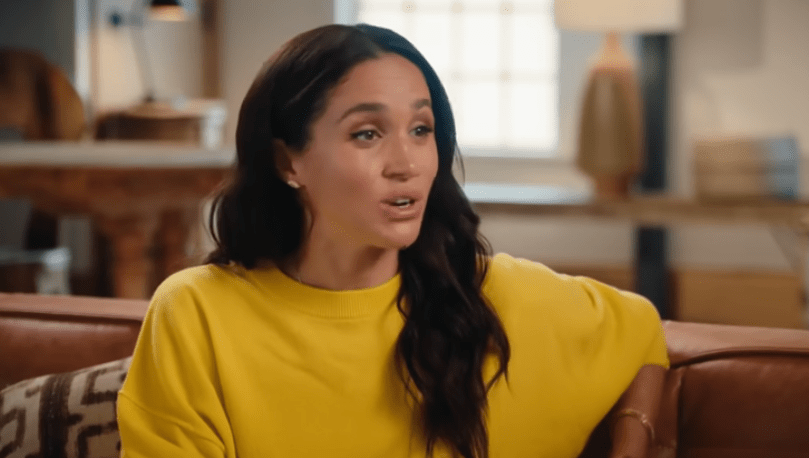
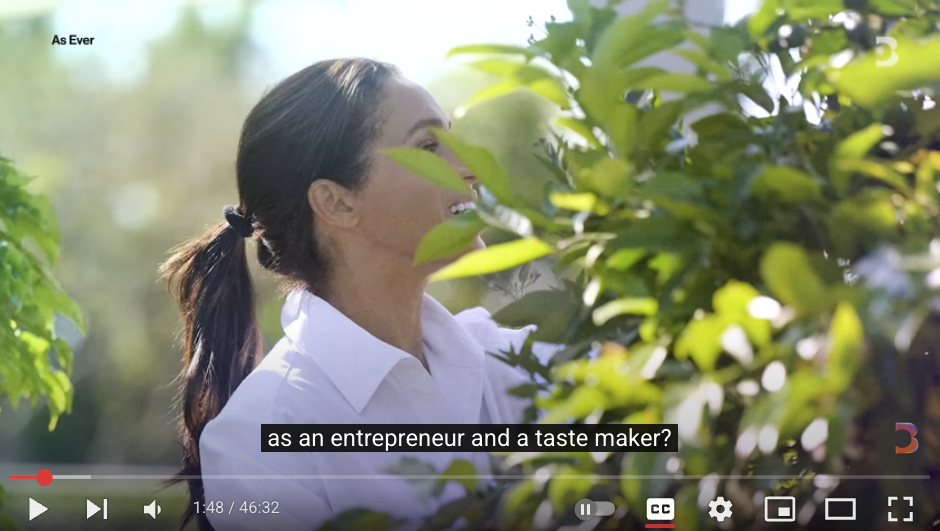
Can Meghan have a second act as an entrepreneur and tastemaker?
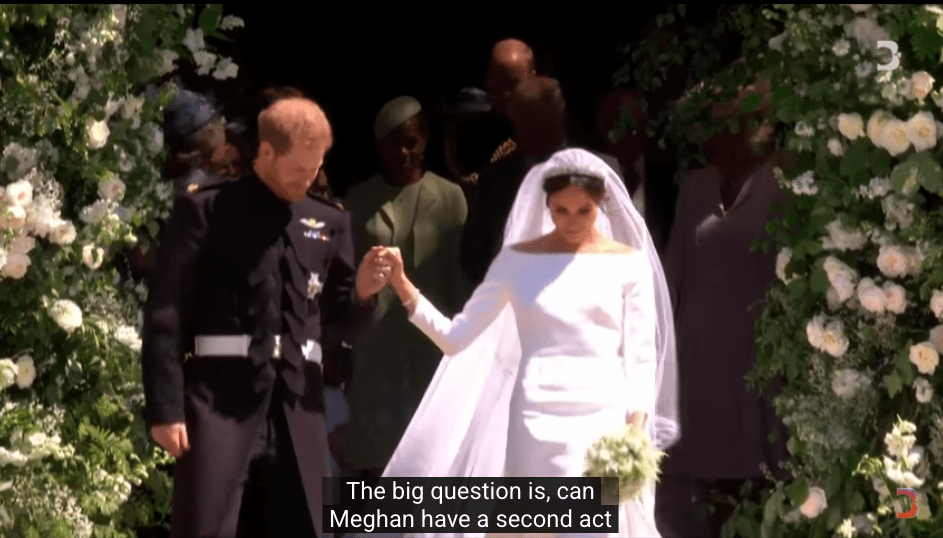
“Can Meghan have a second act?” is a bit disingenuous. It assumes her “first act” was simply being a duchess or being in the royal family, but in fact she already had a full first act as an actress on Suits (seven seasons), plus earlier work in film, media, and her blog The Tig.
Key Moments: Meghan is a real person. She acknowledged all those who made money from writing negative articles. She wondered whether her critics made her dishes all the while saying the opposite.
The “second act” language is media shorthand that often gets used with celebrities. It implies that after the role that made them famous, the public is skeptical about whether they can reinvent themselves in another arena. With Meghan, the press seems to erase her acting career and her decade in Hollywood, and instead recast her “first act” as just being the Duchess of Sussex.
So really, she’s on at least her third act:
- Act One – Actress (Suits, movies, The Tig blog).
- Act Two – Royal/Duchess era, with its restrictions and global attention.
- Act Three – Entrepreneur and content creator (With Love, Meghan, As Ever, Netflix deals, investing).
The “second act” question reflects bias in how the media wants to frame her story: as if she only became relevant through marrying Harry. It overlooks her independent career before.
The interviewer’s framing goes beyond just business success – they’re questioning whether Meghan can establish herself as a “taste maker,” someone whose aesthetic and lifestyle choices influence others.
This positioning is crucial because it acknowledges Meghan’s documented power to drive consumer behavior. The interview mentions the “Meghan Effect” – her wearing a Valencia Key bracelet caused an 11,000% sales spike for that company.
But the “taste maker” question carries higher stakes than just moving products. It’s asking whether she can build lasting cultural influence around lifestyle, aesthetics, and values – the territory occupied by figures like Martha Stewart, Gwyneth Paltrow, or Joanna Gaines.
The interviewer seems skeptical about whether public opinion will allow Meghan to occupy this space authentically. The “will the world let her” phrasing suggests her polarizing public image might prevent people from accepting her recommendations on how to live well, regardless of their actual merit. I found this part offensive. She is doing well. Everyone has a place in the market.
This tension runs throughout the interview. Meghan talks about carefully curating her fashion choices to support female founders, describes her approach to “thoughtful” homemaking, and positions her brand around accessible luxury (the “$9 jar of jam” her teenage self could afford). She’s clearly attempting to establish taste-making credibility.
But the interviewer keeps probing whether this will be accepted or dismissed as performative – questioning everything from her Netflix show’s authenticity to whether criticism stems from genuine dislike or financial motives of critics who “might secretly go home and make single skillet spaghetti.” I felt that regardless of why they watch, a view is a view is a view.
The underlying question isn’t just commercial viability, but cultural authority: can someone this divisive successfully tell others how to cook, decorate, or live? Given how fast her products sell out, I’d say yes! She can sell her products in retail stores. She mentioned her strategy during the interview. She can strike exclusive deals with each retailer rather than all products at one.
The divisiveness stems from several interconnected factors that have created polarized public opinion:
Royal Family Departure: Her and Harry’s decision to step back from royal duties in 2020, followed by public criticism of the institution in their Oprah interview and Netflix docuseries, split opinion between those who saw it as necessary self-preservation and those who viewed it as a betrayal of duty.
Media Narratives: The interview references competing storylines – some media portrayed her as a “divider who traded the trappings of life in the monarchy for the comfy coast of California,” while she describes a “very powerful machine” creating clickbait stories for financial gain. These conflicting narratives have created distinct camps of support and opposition.
Cultural and Political Positioning: Her 2016 comments calling Trump “misogynistic” (referenced in the interview) and her advocacy on social issues have made her a political lightning rod. Some view her as an important voice for progressive causes; others see her as inappropriately political for someone with royal connections.
Authenticity Questions: Critics question whether her lifestyle brand and cooking show represent genuine interests or calculated image rehabilitation. The interview shows she’s aware of this, defending against suggestions she’s “glorifying trad wives” and emphasizing her products’ authenticity.
Class and Race Dynamics: As a biracial American actress who married into British aristocracy, she exists at the intersection of multiple cultural tensions around race, nationality, and social mobility that generate strong reactions.
Media Treatment: The interview notes she was “the most trolled person in the world” in 2018, creating a cycle where intense coverage generates more polarized opinions.
The Main Topics:
Business Focus Dominates (13+ minutes total) The largest portion of the interview centered on Meghan’s commercial endeavors. She spent over 8 minutes discussing her lifestyle brand As Ever, detailing the challenges of scaling homemade jam recipes to mass production and revealing sales jumped from “a few thousand jars” to requiring “purchase orders of a million.” An additional 3+ minutes covered her Netflix series “With Love, Meghan,” where she pushed back against critics calling the show a glorification of “trad wives,” insisting she’s “unapologetic” about showing thoughtful homemaking.
Personal Identity and Media Scrutiny (6+ minutes) Meghan dedicated significant time to addressing public perception, spending nearly 4 minutes on how she handles media coverage and the pressure to appear perfect. She described developing a strategy of compartmentalization, distinguishing between herself and the “caricature” created by clickbait culture. The interview’s emotional climax came in the final 3 minutes when she emphasized wanting people to see her as “a real person” rather than a media construct.
Family and Values (6+ minutes)
Parenting and family life occupied substantial discussion time, with Meghan revealing details about normalizing privilege for her children, from frozen chicken nuggets for dinner to weekend lemonade stands. She spent time explaining how she and Harry plan to prepare their kids for eventually reading negative coverage about their mother.
Political and Social Commentary (5+ minutes) During a restaurant segment, Meghan addressed current political climate and immigration raids in Los Angeles, though she notably avoided direct criticism of President Trump despite the interviewer’s attempts to elicit commentary on her 2016 remarks.
Lighter Segments (8+ minutes combined) The interview included scene-setting moments at a Montecito bookstore, coffee shop, and burger restaurant, plus discussions of royal naming conventions and her early job at a frozen yogurt shop, providing personal texture to the business-heavy conversation.
Meghan’s approach to preparing her children for negative coverage reveals a strategy built around controlled truth-telling and daily example-setting.
Age-Appropriate Truth Strategy: When asked about the inevitable moment her kids will read negative stories, Meghan says she’ll “tell them the truth” but crucially adds “based on what they can carry in that moment.” This suggests a graduated disclosure plan – not hiding the reality but calibrating information to their developmental capacity.
Daily Actions Over Explanations: She emphasizes that “our children get to see the example of who we are as human beings every single day.” This indicates she’s banking on lived experience outweighing written narratives. The idea is that years of observing their parents’ actual character will provide context for whatever they eventually read.
Community Buffer: She mentions their children “have the same great community that we do,” suggesting they’re building a support network that can help contextualize negative coverage when it becomes unavoidable.
Reality Preparation, Not Denial: Notably, she doesn’t suggest shielding them indefinitely. She says “I think about it” when asked if she worries about that moment, acknowledging it’s coming rather than hoping to avoid it entirely.
The strategy seems pragmatic but incomplete – she focuses on building their foundation now rather than detailing specific conversations about media criticism. However, there’s an inherent challenge: at some point, children may question why there’s so much negative attention on their mother if she’s simply the person they know at home. The approach assumes their direct experience will be compelling enough to override widespread public skepticism, which may prove optimistic given the volume and persistence of critical coverage.
It does highlight an unusual burden of parenthood – most parents worry about explaining difficult world events or personal family challenges to their children, not preparing them for widespread public criticism of their mother’s character and choices.
The interview reveals the psychological toll of this anticipation. She mentions her children will inevitably see magazine covers and “we all know moms gossip,” suggesting she’s already thinking about playground conversations and school environments where other children might repeat things they’ve heard at home.
There’s also something particularly difficult about the nature of the coverage she’s describing – not reporting on specific actions or decisions, but what she calls “caricature” creation. It’s one thing to explain to children why their parent made a controversial choice; it’s another to explain why people write untrue things for financial gain.
The preventive strategy she’s employing – building strong daily examples and community support – suggests she recognizes that reactive explanations later may not be sufficient. She’s essentially trying to pre-establish her credibility with her own children before outside voices can undermine it.
What makes it particularly complex is that some of the criticism may touch on real decisions and trade-offs she and Harry made. Unlike completely fabricated attacks, she’ll need to help her children distinguish between legitimate disagreement with their parents’ choices and unfair personal attacks – a sophisticated distinction for young minds to process.
The fact that she’s already strategizing about this when her children are only 4 and 6 shows how present this concern is in her daily parenting experience.
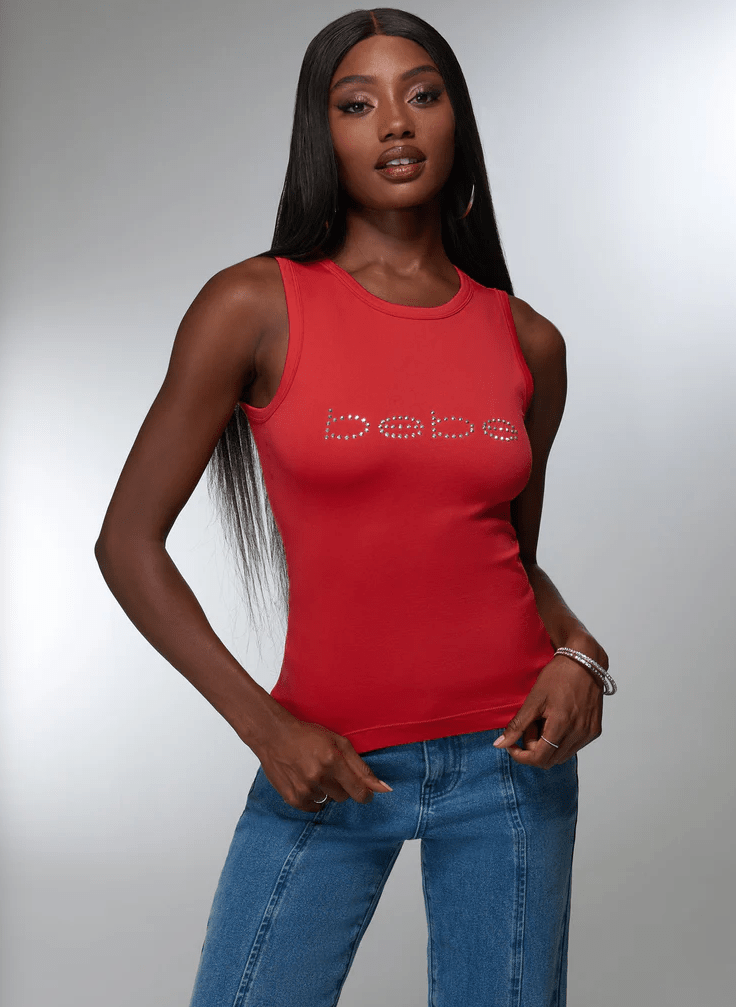
Meghan mentions saving money to buy BeBe. I loved Bebe too and concur it is a great brand and product.
 celebchai.com