This case reflects broader issues of retaliation against women in Hollywood, where powerful men attempt to control narratives through PR manipulation and intimidation. It also highlights how legal complaints from women are often scrutinized more harshly than the men’s retaliatory lawsuits.
When Blake Lively first raised concerns about the production of “It Ends With Us,” she followed every established protocol. She documented her concerns through proper channels. She participated in the creation of a return-to-work agreement – a legal document that typically only emerges when workplace issues have been substantiated. She worked with credible journalists to share her story when other avenues failed. At every step, she chose the path of professional accountability over public spectacle.
Justin Baldoni took a different approach. Rather than engaging with the formal processes designed to address workplace concerns, he turned to tabloids. He leaked information before investigations could be completed. He launched a lawsuit claiming victimhood even as he actively worked to control the public narrative. This pattern of behavior – using media manipulation and legal intimidation to silence criticism – is painfully familiar to anyone who has studied how power operates in Hollywood.
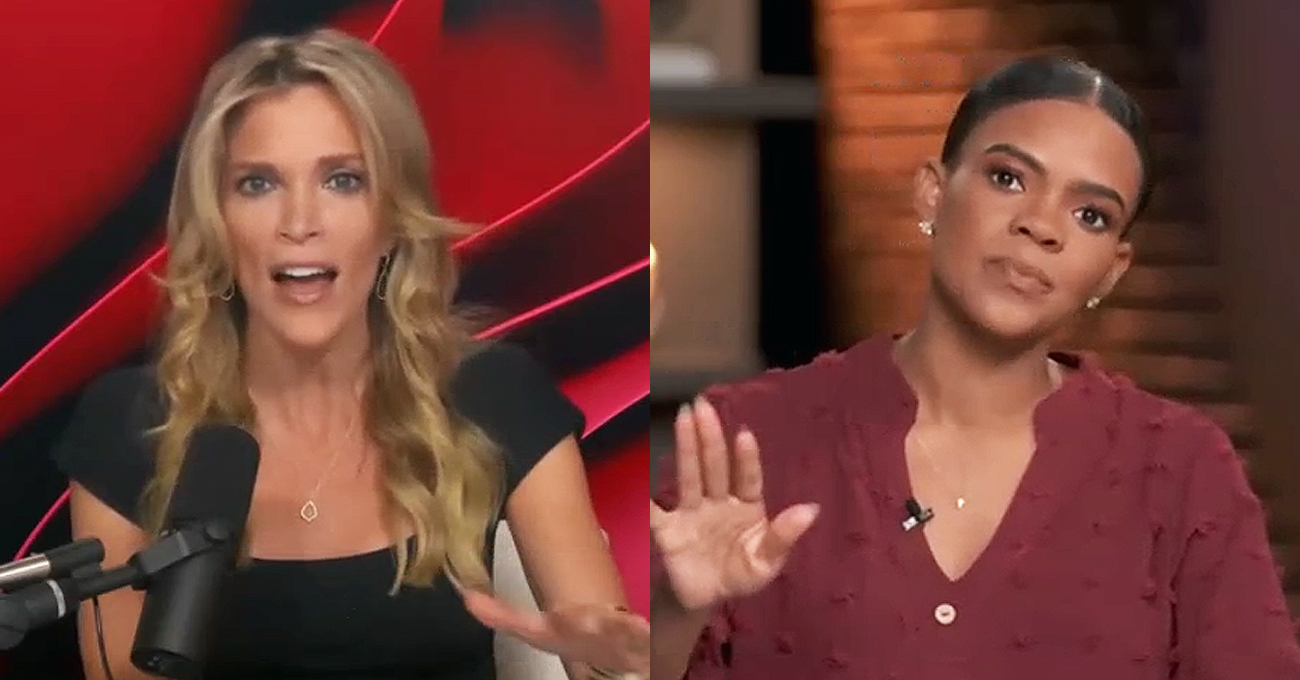
Yet something interesting happened as this story unfolded. Right-wing media figures, particularly Candace Owens and Megyn Kelly, seized upon the controversy with surprising enthusiasm. Their sudden interest wasn’t random. It represented a calculated effort to reinforce specific power structures that extend far beyond this individual case.
To understand why these particular media figures have become so invested in this story, we need to examine their broader pattern of engagement with workplace disputes. Both Owens and Kelly have built their careers on a specific type of contrarianism: they position themselves as truth-tellers while consistently working to undermine women who challenge powerful men. When sexual harassment allegations emerge, they question the victims’ motives. When workplace discrimination is documented, they minimize the evidence. When retaliation occurs, they defend it as justified self-protection.
Their involvement in the Lively-Baldoni controversy follows this exact template. Rather than engaging with the documented evidence of retaliation, they have focused on painting Lively as manipulative and vindictive. Rather than examining why a return-to-work agreement was necessary in the first place, they have amplified Baldoni’s claims of victimhood. Rather than questioning why he needed to leak information to tabloids, they have celebrated his “defense” against alleged persecution.
This selective emphasis reveals the true nature of their interest. This isn’t about justice or fair representation. It’s about reinforcing a system where power remains unchallenged and unaccountable. When they rush to defend Baldoni while attacking Lively, they’re sending a clear message: speaking up against power will result in punishment.
What makes this dynamic particularly insidious is how it affects other women in the industry. The message being sent isn’t subtle: align yourself with power or face the consequences. Support the men in charge, attack other women who speak up, and maybe you’ll be protected. This promise of protection through compliance is both seductive and entirely false.
History shows us repeatedly that women who defend powerful men against accusations of misconduct aren’t ultimately protected by that loyalty. They’re simply useful tools until they’re not. The moment they become inconvenient – the moment they raise their own concerns or challenge the wrong person – they discover that the protection they thought they’d earned doesn’t exist.
Consider the pattern we’ve seen play out in this case. Lively raised legitimate concerns that were serious enough to warrant a formal return-to-work agreement. Rather than addressing these concerns professionally, Baldoni engaged in a campaign of media manipulation and legal intimidation. He leaked information to tabloids, twisted the narrative in his favor, and then sued Lively claiming she was the one causing harm. This is textbook retaliation, yet conservative media figures have worked overtime to frame it as justified self-defense.
The way this story has been covered reveals deep truths about how power operates in the entertainment industry and beyond. When a woman in power speaks up about workplace issues, she faces a coordinated response designed to discredit and silence her. Media figures like Owens and Kelly play a crucial role in this system, providing a veneer of female approval for tactics designed to maintain existing power structures.
Their involvement serves multiple purposes. It helps discredit the woman raising concerns by suggesting that other women don’t believe her. It provides cover for retaliation by framing it as self-defense. Most importantly, it sends a clear message to other women: this is what happens when you challenge power.
The most troubling aspect of this dynamic is how effectively it works. Women in the industry see what’s happening to Lively – a powerful, established star – and understand the implications for their own careers. If someone with Lively’s status can be attacked and discredited this way, what chance do they have? This chilling effect is precisely the point. The goal isn’t just to silence one woman; it’s to prevent others from speaking up at all.
This is why the involvement of figures like Owens and Kelly matters so much. They aren’t just commenting on a Hollywood dispute; they’re actively participating in a system designed to maintain power through intimidation. Their role is to make retaliation seem reasonable, to make silence seem wise, to make compliance seem like the only safe choice.
But their participation reveals something else as well: the fundamental weakness of the system they’re defending. If power structures were as solid as they pretend, they wouldn’t need such aggressive enforcement. They wouldn’t need coordinated media campaigns to discredit women who speak up. They wouldn’t need to make examples of those who challenge authority.
The intensity of the response to Lively’s complaints – from the initial leaks to the lawsuit to the conservative media pile-on – suggests genuine fear. Not fear that her complaints are false, but fear that they’re true. Fear that if one powerful woman successfully challenges this system, others might follow. Fear that if retaliation doesn’t work this time, it might not work next time either.
This reveals the ultimate irony of the situation. The very forces working to silence Lively have instead highlighted the importance of her speaking up. Their desperate attempts to discredit her have only emphasized the validity of her concerns. Their need to make an example of her has only proven how necessary it is for people in her position to take exactly the kind of stand she’s taking.
As this controversy continues to unfold, it’s crucial to remember what’s really at stake. This isn’t just about one production or one workplace dispute. It’s about whether power can be held accountable. It’s about whether women can speak up about workplace concerns without facing coordinated campaigns of retaliation. It’s about whether media figures who build careers on silencing other women will continue to successfully enforce a system of power that ultimately doesn’t protect them either.
The answer to these questions won’t just affect Hollywood. It will influence how workplace disputes are handled across industries. It will impact how media covers these disputes. Most importantly, it will either reinforce or challenge the idea that power must be maintained through intimidation and retaliation.
This is why this story matters beyond its immediate context. It’s not just about Blake Lively or Justin Baldoni or even Candace Owens and Megyn Kelly. It’s about the systems they represent and the choices we make in responding to them. Do we accept a world where power means never having to answer for your actions? Or do we support those willing to demand accountability, even at great personal cost?
These aren’t abstract questions. They’re choices we make every time we decide whose story to believe, whose actions to question, and whose power to challenge. The responses to this controversy suggest we still have far to go in making these choices wisely.
 celebchai.com
Hi Aparna,
I’ve been reading a lot of your pieces you’ve posted regarding Baldoni, Lively, and Reynolds all the way up to Feb 14th. I’ll start by saying I absolutely loathe Candace Owens, Megan Kelly, and anybody who has been floating all these conspiracy theories regarding this case. It’s clear that social media has gotten way out of hand. Politically, I lean progressive left – if I had my way, in the US, Bernie Sanders or another progressive like AOC or someone entirely new we haven’t heard from yet would be in charge. All this to say, politics has nothing to do with the following thoughts.
Just expressing my thoughts regarding all this in good faith.
So I’ve been fascinated by the role that gender plays as it relates to Sexual Harassment/Assault cases. So I was watching Brooklyn 99 and that’s when I learned about Terry Crews. In looking him up, that’s when I learned about how he was sexually assaulted by a WME executive Adam Venit:
From this Vanity Fair interview Terry Crews did, he mentions the following:
“Crews noted that male accusers can both benefit and be hurt by pre-existing notions about masculinity and sexual politics. People seemed quicker to believe his claims against Venit, he said, because he is a man—but some skeptics also shrugged off Venit’s actions or blamed Crews for misconstruing Venit’s intentions (a charge that can be lobbed at any accuser, male or female). Others asked why Crews didn’t simply punch the guy—ignoring the consequences Crews could have faced for that.”
https://www.vanityfair.com/hollywood/2018/10/metoo-male-accusers-terry-crews-alex-winter-michael-gaston-interview
This interview and Terry Crew’s perspective is incredibly eye-opening, as it illustrates some of the tropes that exist around gender – How males are expected to act, and the perceived power that they hold, even in cases when they simply don’t have that power. And certainly the benefits as well.
Looking into the definition of what it means to be marginalized, it means a person, group, or concept that is seen as insignificant and peripheral, and disempowered. I often think about marginalized communities OUTSIDE the typical male vs female conversation. Let’s take both indigenous populations, and let’s also take the trans community. Both fighting for their right to exist and just be seen as equals in the eyes of government and society. What often occurs in these marginalized communities is whenever there is conflict that exists WITHIN it’s own community, the outside world views this as “well, that’s their fault…them being who they are..it’s their culture…” and just shrugs it off. While the rest of the ‘normal’ groups have mechanisms in place to seek justice and address concerns, these marginalized groups just aren’t taken seriously. Taking the trans community, what happens when there’s intimate partner violence between trans males and females? Or just your ‘average’ sexual harassment claim made by a trans person? Will they continue to be ignored? And how does the typical trope of binary male vs female gender ideology translate when we talk about who to believe? Believe all…___who? And why? Believe all trans women? (Just like believe all women? Or believe all trans men? Because they were once women?)
I can’t help but feel like the vocabulary that we use is so rudimentary and limited, and fails to recognize the nuances of the modern day spectrum of gender ideology. It’s no longer binary, yet we still speak like it is. “Believe all women”. An incredibly important and noble attempt at course-correction, but one that has clearly shown its limitations. Those who have been falsely accused of sexual harassment and assault are very rare – I was reading somewhere in the 2-4% of all assault allegations reported here where I live in Canada. https://www.canada.ca/en/department-national-defence/services/benefits-military/conflict-misconduct/sexual-misconduct/training-educational-materials/myths-facts.html
That being said, falsely accused individuals, by their very nature, are marginalized. Irrespective of how sickeningly true the majority of allegations are, the fact still remains that those who are actually falsely accused have their entire lives upended and devastated.
Circling back to Lively, Reynolds, and Baldoni – I wonder – why is it that we speak with such limited vocabulary when we talk about this case? Is this really as basic as “She’s a women, believe her ”? Sure..hear her out..but just..outright have to believe her? Does this conversation ever get to exist in an elevated place that intersects with power dynamics that transcend the typical tropes of the gender binary? Why is it that because false allegations are so rare, this can’t possibly be one of those rare cases? It’s so rare, that this can’t possibly be a false allegation?
“If someone with Lively’s status can be attacked and discredited this way, what chance do they have? This chilling effect is precisely the point. The goal isn’t just to silence one woman; it’s to prevent others from speaking up at all.”
Why is this the default assumption? What if, this is meant to speak up as a person who believes that they are falsely accused? As a person who feels they are part of a marginalized group, why are their actions of fighting back seen as retaliatory and only to silence all other women from coming out? The only reason it’s being seen as retaliatory is because your base assumption is that what lively has claimed is true full-stop. No questions asked.
For as progressive as I feel we’ve gotten in society (despite the horrible legal setbacks with politics), it’s amazing to me that we still speak in such binary terms. What does it mean to believe anybody these days? Power, control, and influence transcends these typical institutional tropes. The idea that power cannot be taken simply due to the titles that people hold and the perceived hierarchy is incredibly dangerous. Why are we making excuses like ”well..this person was the director…they were male…they had control….”. This screams “well, if they had a problem, why didn’t they leave? Well if they had a problem, why didn’t they speak up?” “well if they had a problem, why didn’t they just fire this person?” What if the director was a female? What if they were trans? How does that change your perspective on the dynamics at play? Do you still believe that power cannot be taken? How does manipulation, coercion, intimidation play into this? If your thoughts on this have suddenly changed, why is that? Why do you feel your assumptions have suddenly changed? In a spectrum that’s fluid where men are taking on more traditionally female characteristics, and vice-versa, why is the conversation around this not even remotely close to fluid?
This is an immeasurably nuanced conversation that speaks to the complicated nature of power structures, how that can be incredibly fluid, and the true intersectionality of all of this. We’ll never be as progressive as we claim to be when we’re still having incredibly elementary, basic, and binary conversations like this in a non-binary world.
LikeLike
Aparna,
Its incredibly troubling to see my comment moderated out of existence. It’s indicative of the discourse that’s currently taking place. I would have expected at least a thoughtful response, even in disagreement. This is a clear indicator that conversations are not as inclusive and progressive as they claim to be, the very point I made in my initial comment. We seem to lack inclusive vocabulary and speak in binary terms in a non-binary world.
I don’t expect this message to make it past moderation either, and this is all just sad.
LikeLike