1. Racial Disparities in Healthcare:
- Black Women and Maternal Mortality: It is well-documented that Black women in the United States experience higher rates of maternal mortality compared to white women. According to the CDC, Black women are three to four times more likely to die from pregnancy-related causes than white women. This disparity persists even when controlling for factors like income and education.
- Black and Brown Representation in Medicine: The lack of diversity in healthcare providers can contribute to disparities in care. Studies have shown that patients often feel more comfortable and receive better care when their healthcare providers share their racial or cultural background. Increasing the number of Black and Brown healthcare professionals is seen as a potential solution to improve outcomes.
2. Criminal Justice and Racial Bias:
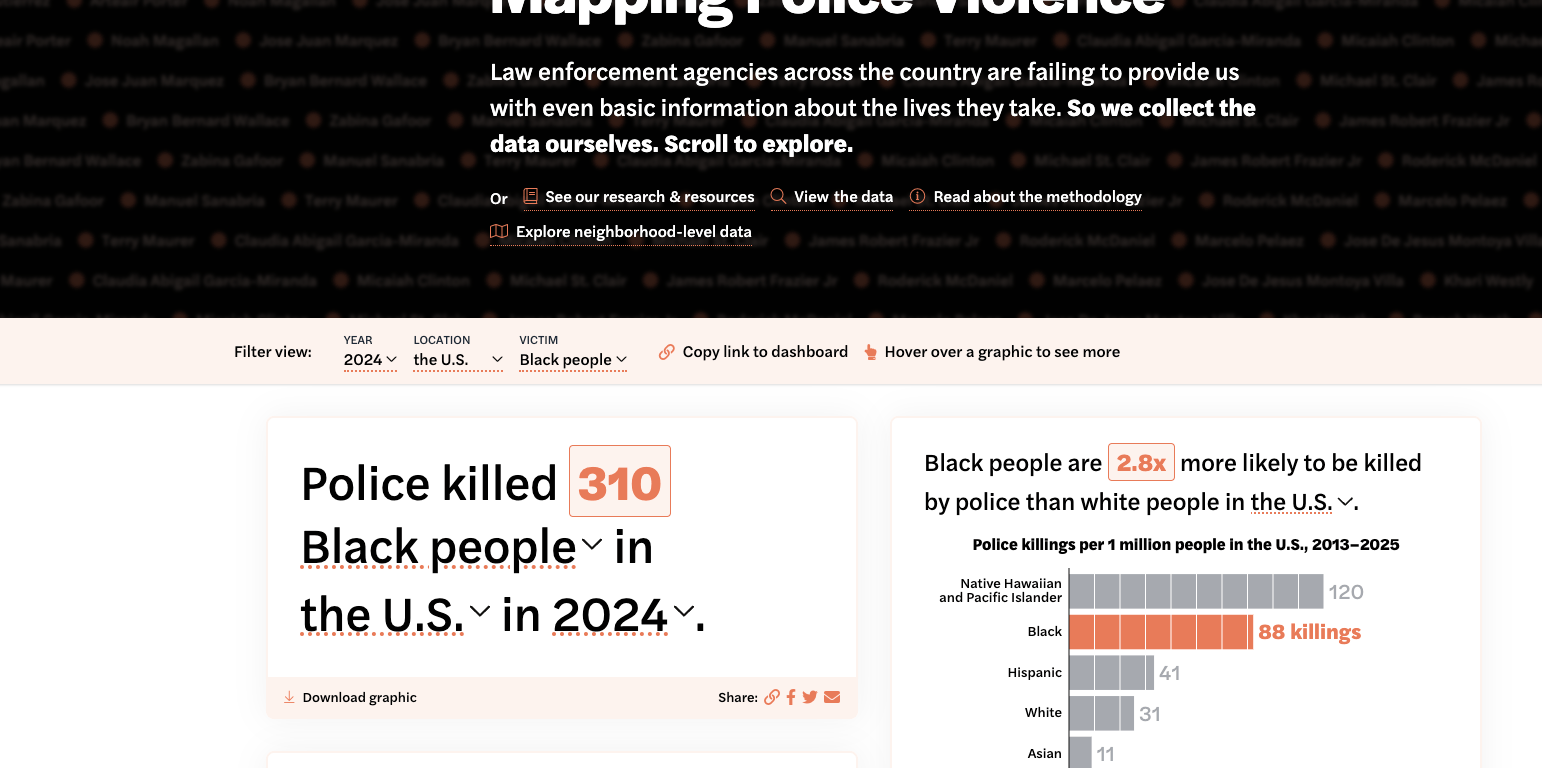
- Police Violence and Black Men: Black men are disproportionately affected by police violence. According to data from Mapping Police Violence, Black people are three times more likely to be killed by police than white people. Additionally, Black men are more likely to be falsely accused and wrongfully convicted of crimes.
- Incarceration Rates: While Black Americans make up about 13% of the U.S. population, they account for a disproportionate percentage of the prison population. However, it’s important to note that the majority of Black Americans are not incarcerated. The claim that “1 in 3 Black men goes to prison” is an exaggeration; the correct statistic is that 1 in 3 Black men can expect to be incarcerated at some point in their lifetime, which is still alarmingly high but not the same as saying they are currently in prison.
3. Systemic Racism and Historical Context:
- Historical Malpractice: The conversation references centuries of malpractice against Black women, which is accurate in the context of historical medical exploitation (e.g., the Tuskegee Syphilis Experiment) and ongoing systemic racism in healthcare.
- White Supremacy in Policing: The claim that police forces have been infiltrated by white supremacist groups is supported by some investigations. For example, the FBI has warned about the infiltration of law enforcement by extremist groups, including white supremacists.
4. Community Building and Distrust:
- Forming Separate Communities: The idea of Black and Brown communities forming their own spaces is a response to historical and ongoing systemic racism. While some advocate for self-segregation as a means of protection and empowerment, others argue for integration and systemic change.
- Distrust of White People: The sentiment of distrust towards white people is rooted in historical and contemporary experiences of racism. However, it’s important to recognize that not all white individuals perpetuate racism, and many are allies in the fight against systemic injustice.
5. Abortion Rates:
- The statistic mentioned (28.6 abortions per 1000 pregnancies) is not accurate. According to the CDC, the abortion rate in the U.S. is approximately 11.4 abortions per 1,000 women aged 15-44 (as of 2020). Abortion rates are influenced by a variety of factors, including access to healthcare, contraception, and socioeconomic status.
6. Interracial Violence:
- The claim that “blacks kill more blacks than any other race” is a common but misleading statistic. Most violent crime is intraracial, meaning that people are more likely to be victimized by someone of their own race. This is true for both Black and white communities. The focus on Black-on-Black crime often ignores the broader context of systemic inequality, poverty, and lack of resources in many Black communities.
Conclusion:
The conversation reflects genuine concerns about racial disparities in healthcare, criminal justice, and systemic racism. While some of the statistics and claims are accurate, others are exaggerated or taken out of context. It’s important to approach these issues with a nuanced understanding of the data and the historical and systemic factors that contribute to these disparities.
For further reading, you can refer to sources like the CDC, NAACP, Mapping Police Violence, and FBI reports on extremism in law enforcement.
Certainly! Here are some reliable sources that provide data and context on the topics discussed:
1. Racial Disparities in Healthcare:
- CDC on Maternal Mortality:
CDC Maternal Mortality Rates - Study on Racial Disparities in Maternal Health:
Racial Disparities in Maternal Health
2. Criminal Justice and Racial Bias:
- Mapping Police Violence:
Mapping Police Violence - NAACP Criminal Justice Fact Sheet:
NAACP Criminal Justice Fact Sheet - Innocence Project on Exonerations:
Innocence Project
3. Systemic Racism and Historical Context:
- FBI Report on Extremist Infiltration in Law Enforcement:
FBI Report on Extremist Infiltration - History of Medical Exploitation (Tuskegee Syphilis Experiment):
CDC Tuskegee Study
4. Abortion Rates:
- CDC Abortion Surveillance Report:
CDC Abortion Surveillance
5. Interracial Violence:
- Bureau of Justice Statistics on Violent Crime:
BJS Violent Crime Statistics - Analysis of Intraracial Crime:
Intraracial Crime Analysis
Additional Resources:
- NAACP on Racial Disparities:
NAACP Racial Disparities - CDC on Health Disparities:
CDC Health Disparities

