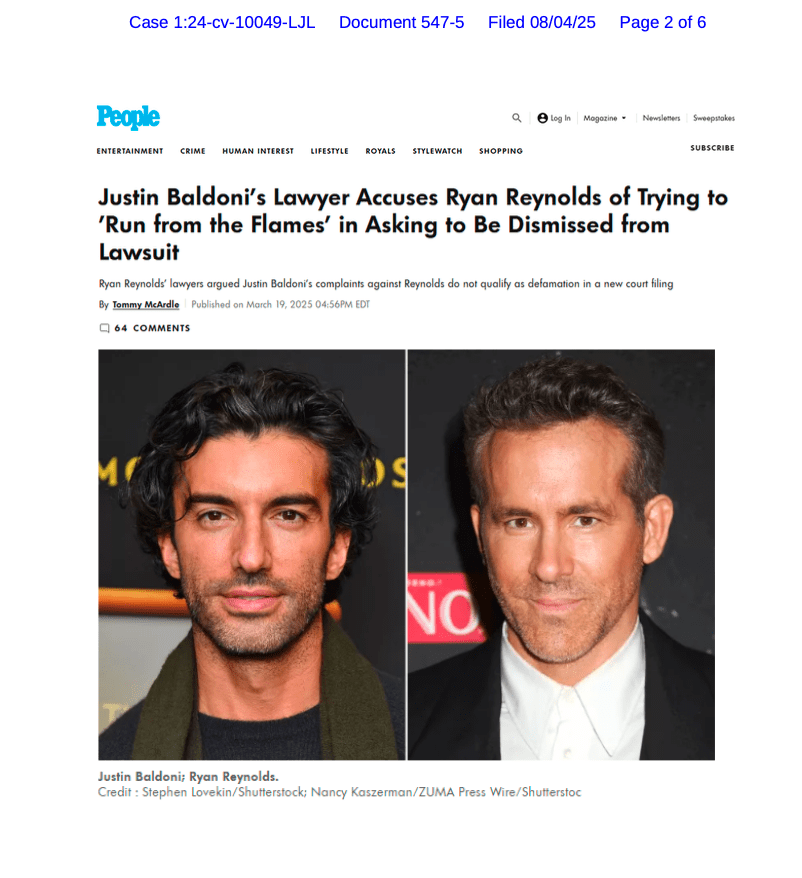
In a sharply worded motion filed August 4, 2025, Blake Lively’s legal team asked the Southern District of New York to impose sanctions against celebrity attorney Bryan Freedman and the Wayfarer Defendants, accusing them of brazenly violating a court order that restricted public commentary on the high-profile defamation case. The motion, now public as Dkt. 546, alleges that Freedman deliberately undermined the Court’s gag order by engaging in a coordinated media campaign to discredit Lively and influence public opinion—behavior the filing calls “deliberate, strategic, and contemptuous.”
This is more than a war of words. If the Court agrees, Freedman could face fines, evidentiary sanctions, or even referral for disciplinary review. At the center of the motion is a clear argument: Freedman used his media access and press connections to wage a reputational war that the Court had expressly barred.
From the Courtroom to TMZ
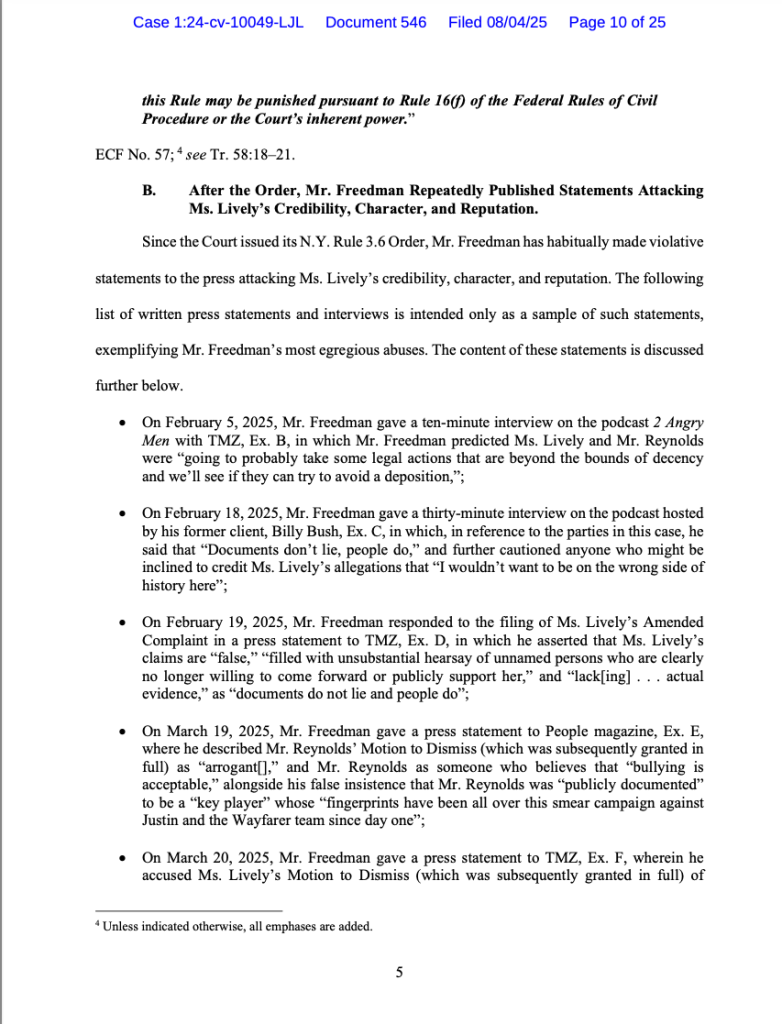
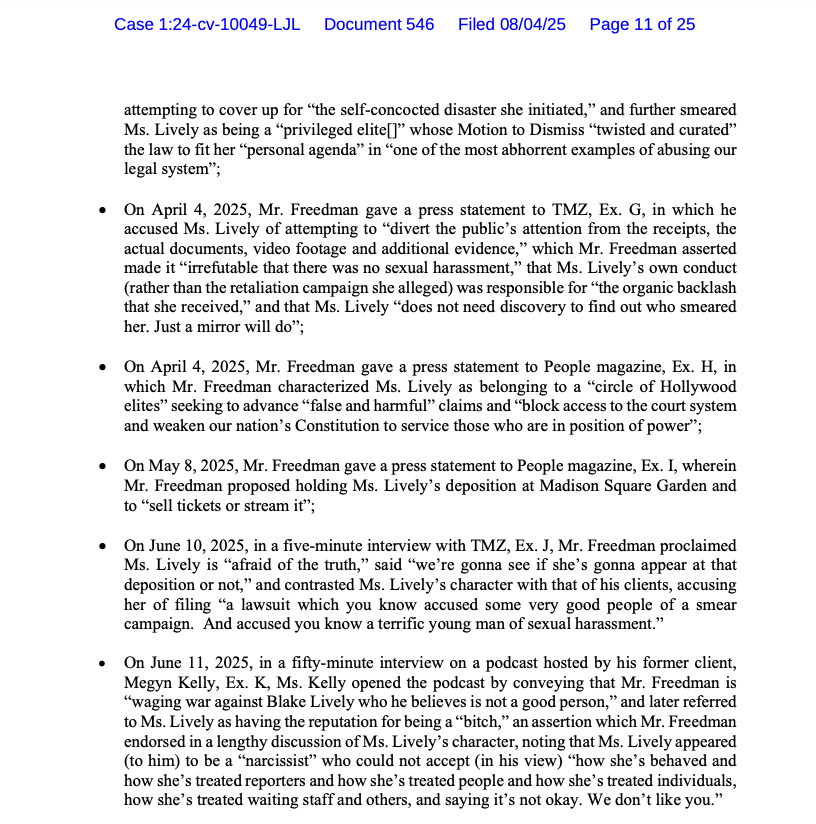
The background is striking. In April 2024, all parties stipulated to abide by Rule 3.6 of the New York Rules of Professional Conduct, prohibiting attorneys from making extrajudicial statements likely to prejudice a jury. The Court then issued an order adopting that stipulation. But Freedman, Lively’s team argues, flouted the agreement almost immediately.
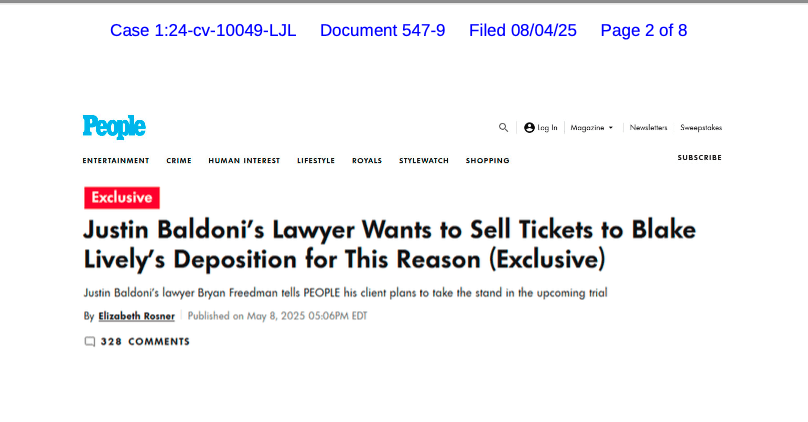
The motion catalogs multiple interviews and public statements made by Freedman—some under his name, others attributed to “Wayfarer sources”—including:
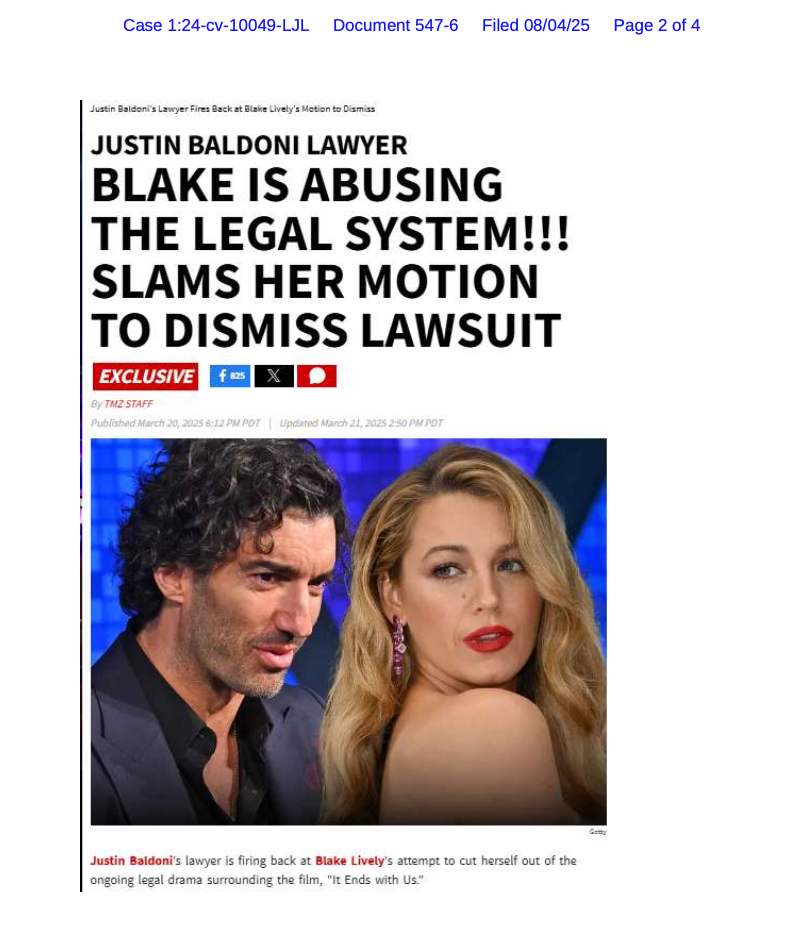
- Direct quotes to TMZ calling Lively’s lawsuit “meritless” and “publicity-seeking”
- Appearances on national podcasts accusing Lively of “malicious smear tactics”
- Comments to People Magazine and Deadline subtly asserting Lively’s bad faith
One particularly damning moment? Freedman allegedly said, “I hope I don’t get sanctioned,” during a televised podcast interview, directly mocking the Court’s prior admonishment.
Rule 3.6 and the Ethics of Silence
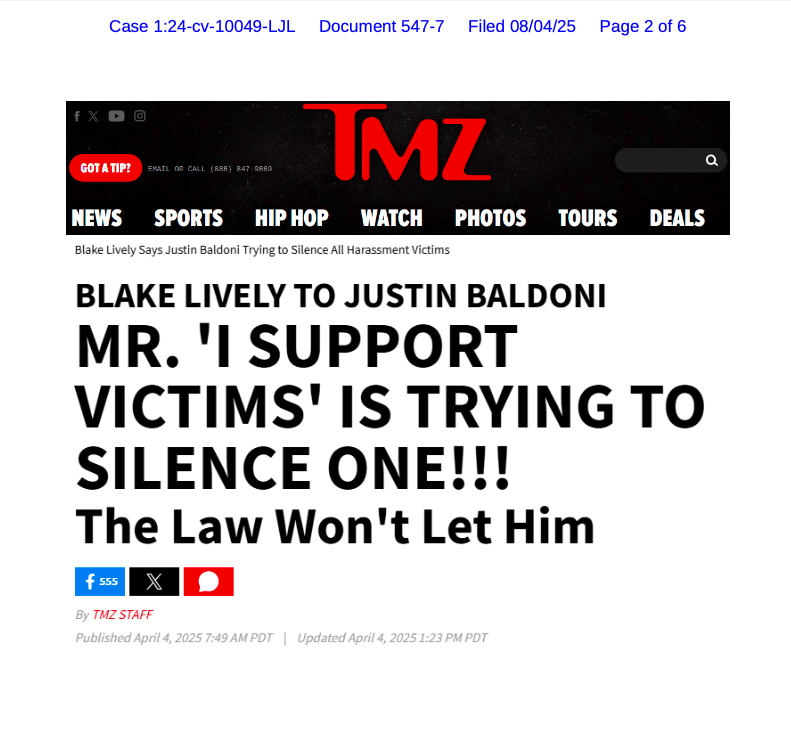
At the heart of the sanctions motion is Rule 3.6 itself, which bars lawyers from making public statements that could materially prejudice an adjudicative proceeding. As Lively’s attorneys point out, this rule is not academic—it’s meant to protect the jury pool and the integrity of the process.
Citing Gentile v. State Bar of Nevada and Chambers v. NASCO, Lively’s team argues that Freedman’s media blitz is not protected speech but sanctioned misconduct. They assert that Freedman’s conduct was not just a one-off slip, but a pattern designed to intimidate witnesses, smear Lively in the press, and pressure the Court through public opinion.
Exhibits That Speak Volumes
Supporting the motion are Exhibits E through I, which include:
- Media screenshots from TMZ, Deadline, and The Hollywood Reporter
- Podcast transcripts where Freedman criticizes Lively’s credibility
- Social media commentary repeating and amplifying Freedman’s claims
Each of these examples, the motion argues, shows intentional violation of the gag order and improper use of media channels to gain tactical advantage.
Exhibit A:
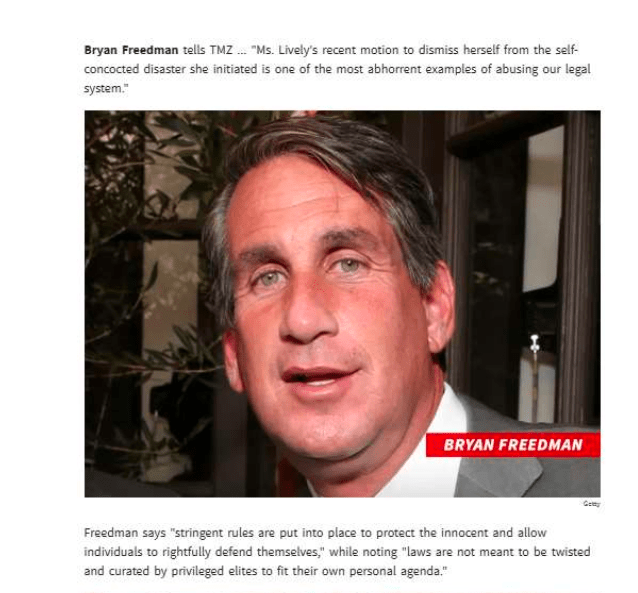
These statements were issued after the parties had stipulated to the application of Rule 3.6 of the New York Rules of Professional Conduct, which restricts extrajudicial statements that are likely to prejudice a case. Lively’s team argues this isn’t just misconduct—it’s a campaign.
A Coordinated Media Strategy
Exhibit A reads like a crisis PR manual masquerading as legal representation. Starting with a New York Times statement on December 21, Freedman accused Blake Lively of “false and salacious” claims, alleging she “planted stories” with media via her publicist Leslie Sloan. Over the next 30 days, Freedman escalated:
- Accused Lively of “a vicious smear campaign” in USA Today
- Claimed she was “bullying and threatening” in People
- Promised to “shock everyone” with lawsuits in Deadline
- Suggested The New York Times was manipulated by “Hollywood elites”
What began as denials quickly turned into full-scale character assassination.
Lively as “Powerful,” “Manipulative,” and “Revolting”
In a Megyn Kelly Show interview, Freedman called Lively the aggressor, not the victim. He claimed she made “false sexual harassment allegations” to gain power and become the “de facto director.” He went so far as to say that more than 50 people had contacted his firm to complain about Lively’s behavior, all “organically.”
The repeated themes? That Lively was:
- Bullying and threatening staff
- Using the media for personal gain
- Exploiting real victims of harassment for publicity
By January 18, he described her claims as “revoltingly false,” accusing her of using “power, privilege and all-out lies” in her campaign.
The Website That Was Never Meant for Court
Freedman repeatedly threatened to release a public website showing “every single text, email, and video” to disprove Lively’s allegations. By January 21, he had leaked video.
Exhibit B:
Exhibit B (Doc. 547-2) in support of Blake Lively’s motion for sanctions, now serves as a potential smoking gun in her legal team’s efforts to hold opposing counsel accountable for violating a court-imposed gag order.
Titled 2 Angry Men, the podcast aired in July 2025 and featured Freedman in conversation with media figures Harvey Levin and Mark Geragos. What unfolded was a candid discussion not only about the legal merits of the case but also about the deliberate media strategy used to shift public opinion against Blake Lively.
“This Isn’t About Winning a PR War… But It Is”
Freedman opens the podcast claiming this case is about “saving someone’s life,” referring to Baldoni. Yet within minutes, he admits to having “put the information out there” to help shift the narrative. Geragos goes further, saying Freedman “raised the Titanic” by changing the tide of public opinion that had initially favored Lively. The podcast repeatedly acknowledges that Blake was “winning” at the start, but the narrative has since “gone full Amber Heard on her.”
This direct acknowledgment of a coordinated reputational shift is exactly what Lively’s legal team has accused Freedman of doing in defiance of Rule 3.6. By bringing these comments into the public sphere, Freedman arguably converted his courtroom advocacy into a media assault campaign.
Taylor Swift, Ryan Reynolds, and a Weaponized Witness List
At one point, Freedman discusses who will be deposed in the case, including Blake Lively and Ryan Reynolds and notably, Taylor Swift. While conceding that Swift’s deposition hasn’t been confirmed, he asserts, “She was there for that meeting,” implying that she will be drawn into the litigation spectacle. Harvey Levin underscores the PR risk, saying: “The last thing they want is… the biggest star in the world… being grilled by Bryan Freedman.”
EXHIBIT C
This transcript is a recorded interview between Billy Bush and Bryan Freedman, the high-profile attorney representing Justin Baldoni in the federal lawsuit Lively v. Wayfarer Studios LLC et al., 24-cv-10049. The case, filed in the Southern District of New York, involves serious allegations of sexual harassment and professional misconduct raised by Blake Lively and others. This interview, marked as Exhibit C in the court filing, appears designed to influence public perception and highlight key defense strategies in advance of formal court proceedings.
Here is a breakdown of key legal and strategic takeaways from the document:
1. Strategic Use of Media to Shape Narrative
Freedman engages in a carefully orchestrated media defense:
- Portrays Baldoni as a family man under attack, not on vacation but “seeking peace.”
- Refers to allegations as untrue, describing the situation as “distressful” and a public trial by media.
- Contrasts Baldoni’s behavior with that of others (e.g., referencing Lance Armstrong or Martin Luther King to highlight different public personas and injustices).
- Accuses Lively’s team of gamesmanship through broad subpoena requests (two-and-a-half years of communications), calling it inappropriate and overbroad.
Legal relevance: This mirrors tactics seen in defamation defenses where the goal is to counter reputational damage in parallel to litigation, similar to how Depp’s team used media to challenge Heard.
2. Undermining the Validity of Anonymous HR Complaints
- Freedman questions the authenticity and timing of anonymous HR complaints allegedly submitted to Sony, not Baldoni’s company, Wayfarer.
- Points out that Sony publicly denied receiving any complaints, and the only evidence is redacted and unverified.
- Suggests media outlets declined to publish these complaints out of fear of defamation liability — a strategic way to suggest the allegations lack credibility.
Litigation implication: This will likely support a motion to strike or exclude based on improper or inadmissible evidence, especially if the HR complaints cannot be authenticated.
3. Asserting Improper Discovery Tactics
- Challenges Blake Lively’s subpoena for Baldoni’s entire communication history, saying discovery must be narrowly tailored.
- Asserts that requesting every phone call and text for 2.5 years is a “fishing expedition”, not legitimate discovery.
Strategic effect: Lays the groundwork to object to discovery, possibly filing a motion to quash or motion for protective order under FRCP 26(c).
4. Ethical Framing of Baldoni and Freedman’s Role
Freedman:
- Claims he thoroughly vetted Baldoni and reviewed every document, text, and voice memo before agreeing to represent him.
- Frames Baldoni as an “honorable man” and insists they are not engaging in smear campaigns.
- Emphasizes that the defense wants truthful evidence admitted, not blanket denials.
Credibility argument: This positions Baldoni as a victim of cancel culture and his team as principled — important for jury perception and summary judgment motions.
5. Litigation Objectives and Settlement Posture
- Baldoni refused mediation, demanding that he be cleared of all harassment accusations before entertaining settlement.
- Bryan Freedman emphasizes that Baldoni’s priority is reputation, not money, though he admits Baldoni has suffered massive professional fallout.
- Mentions impact on others (publicists Jen Abel, Melissa Nathan, producer Jamie Heath) as additional grounds for defamation countersuits.
Legal leverage: This shows they’re not pursuing early resolution and are prepared for full litigation, likely including cross-claims or SLAPP defenses.
6. Implied Defamation Strategy
The defense suggests that:
- Lively’s statements were knowingly false or made with reckless disregard.
- Public commentary (e.g., jokes at Saturday Night Live) are inconsistent with actual emotional harm.
- The case involves multiple public figures (e.g., Ari Emanuel), and strategic alliances could be financially motivated, not grounded in truth.
Anticipated legal tactic: Use of anti-SLAPP motions (especially if countersuing in California), First Amendment defenses, and reputation damage countersuits like the one filed by Jed Wallace.
Exhibit J, a certified transcript of Justin Baldoni’s counsel Bryan Freedman’s June 10, 2025 appearance on TMZ Live, provides multiple strategic admissions that can significantly narrow the litigation and shape discovery. First, Freedman unequivocally acknowledges that the defamation claim against Blake Lively was dismissed with prejudice. This public statement confirms that defamation is off the table and cannot be repleaded under any other label—effectively blocking Plaintiffs from introducing reputational harm arguments under alternative torts.
Freedman also limits the scope of the case moving forward by identifying four remaining claims: intentional and negligent interference with contract and prospective economic advantage (against Blake and Ryan Reynolds), and breach of the implied covenant (against Blake only). This is a major procedural concession, as it excludes emotional distress, harassment, or retaliatory motives from the remaining case theories. It supports the argument that any further pleadings or discovery attempts must be confined to economic harm only.
Importantly, Freedman claims Plaintiffs have “video,” “footage,” “texts,” and “emails” to support their position that no sexual harassment or smear campaign occurred. This constitutes a waiver that opens the door to immediate discovery demands for all referenced materials. His statement also helps set up authentication requests, RFAs, and potential evidentiary objections if these materials are later withheld. Additionally, Freedman’s commentary on the court’s finding of privilege regarding statements in the New York Times article reinforces that litigation privilege applies—supporting anti-SLAPP defenses and limiting defamatory inferences through the press.
Overall, the transcript is a valuable litigation tool. It functions as a binding admission under FRE 801(d)(2), justifies narrowly tailored discovery, and confirms the dismissal of key claims. It can also be used to constrain future pleadings, strike unsupported allegations, and resist attempts to reintroduce privileged material.
Exhibit K
Exhibit K is a certified transcript of Bryan Freedman’s July 2025 interview on The Megyn Kelly Show, in which he confirms the dismissal of Justin Baldoni’s defamation, civil extortion, and false light claims against Blake Lively and others, while emphasizing that four economic torts remain viable for repleading under the court’s roadmap. Freedman admits the emotional distress claims by Lively were dropped after she refused to turn over medical records, and he voices concern over the financial threat posed by California Civil Code § 47.1, which may entitle Lively to treble attorneys’ fees.
He repeatedly references their possession of video footage, texts, and witness testimony supporting Baldoni’s defense, framing the case as one about clearing his name rather than seeking monetary relief. Freedman also alludes to potential discovery involving Taylor Swift and reiterates that Baldoni has no intention of settling, underscoring a full-speed push toward trial.
The Relief Sought
Lively’s team asks for two things:
- Sanctions under Rule 16(f) and the Court’s inherent authority
- An evidentiary hearing to determine the full extent of Freedman’s extrajudicial campaign
They stop short of asking for disqualification—but the motion clearly reserves the right to pursue that route if violations continue.
A Strategic Move Ahead of Trial
This isn’t just about silencing an aggressive attorney. It’s about laying the groundwork for:
- Controlling jury bias caused by prejudicial pretrial publicity
- Building a sanctions record for use on appeal if needed
- Precluding evidence introduced via improper media pressure
If successful, the sanctions motion could reframe the trial by discrediting the tactics of Lively’s opponents and restoring balance to the courtroom.
And more importantly, it may set a national example for how courts handle publicity-fueled litigation in the age of TMZ, Instagram, and viral trial coverage.
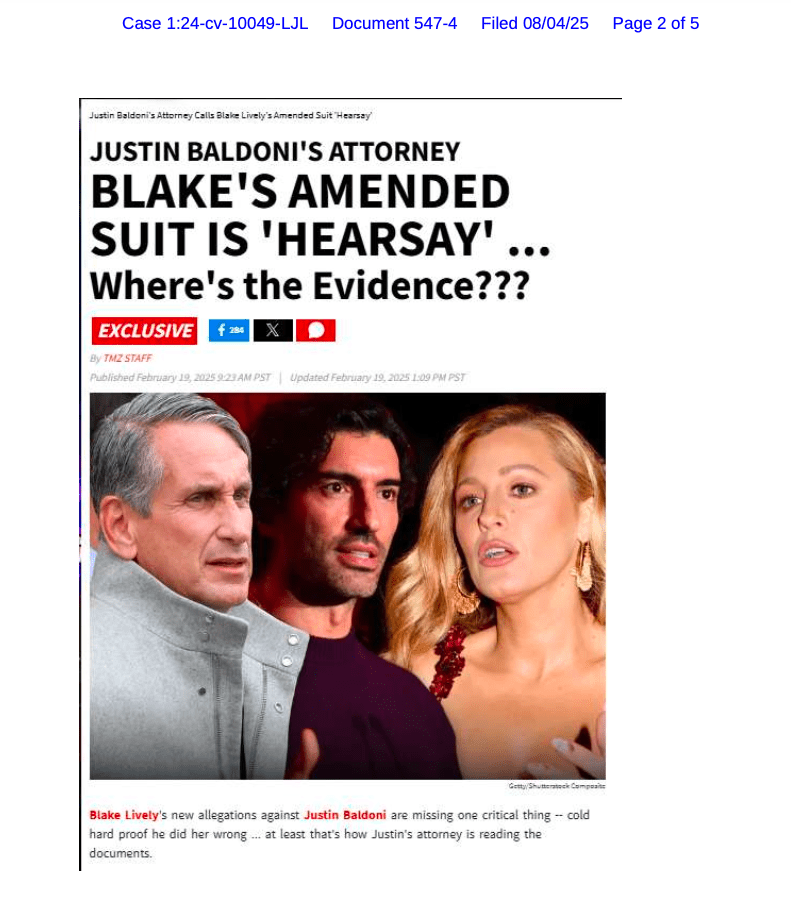
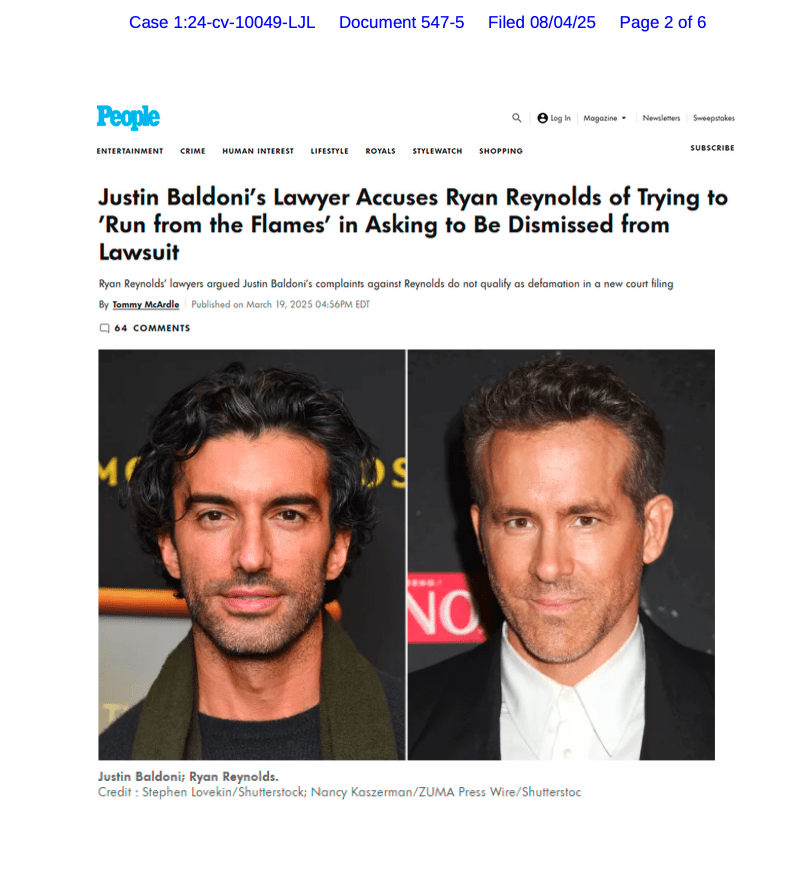
 celebchai.com