How a settlement release, a friendly broadcast, and a comment section did one job together
There is a particular kind of media event that only looks like news. It has the shape of news. A document gets released. A lawyer answers questions. A host frames the stakes. But if you watch what the parts are actually doing rather than what they say they are doing, you find something closer to a single coordinated instrument, built to produce one outcome in the audience’s head and leave it there.
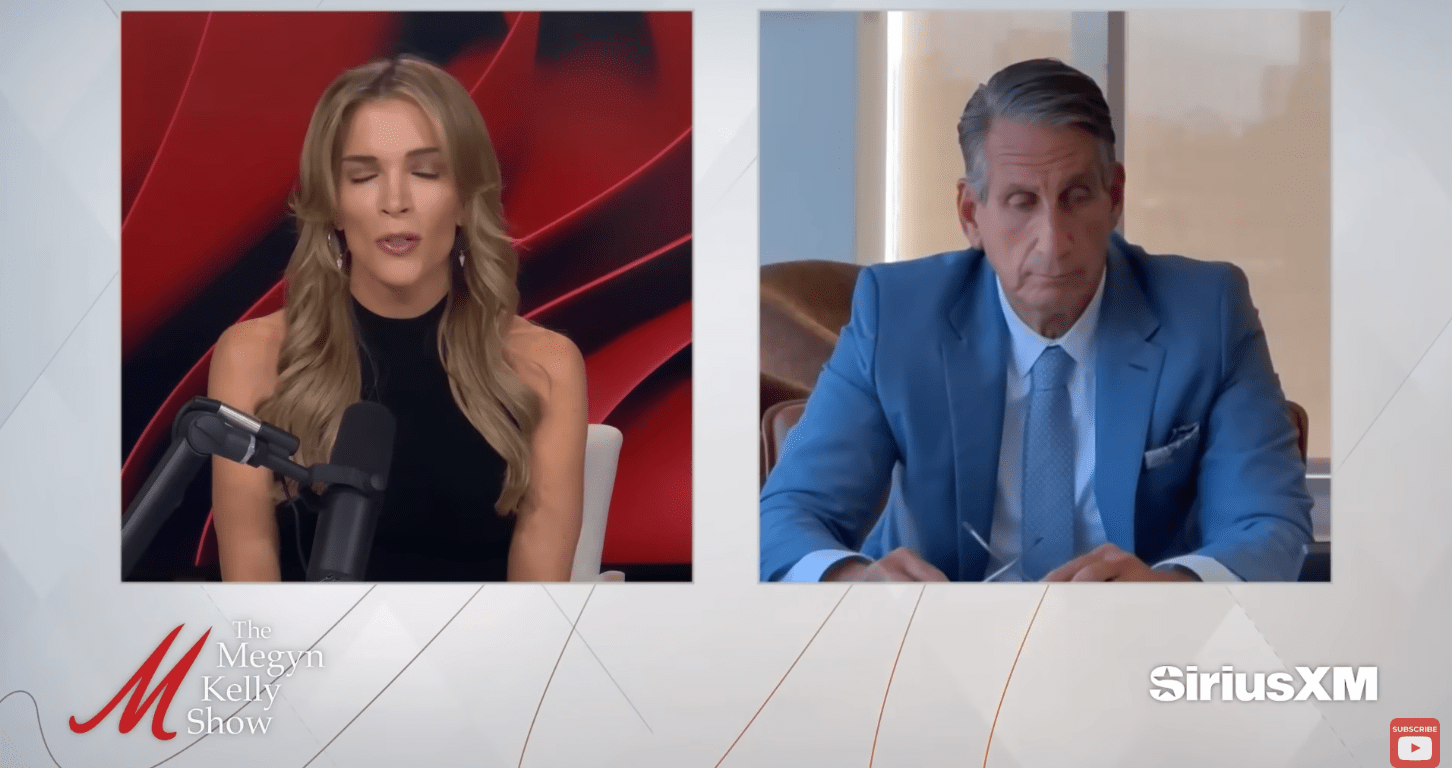
The June 15 Megyn Kelly segment with Bryan Freedman is that kind of event. Freedman, founder of Liner Freedman Taitelman and Cooley and Justin Baldoni’s attorney, came on the show to release what he described as the full Lively-Baldoni settlement agreement and to explain why, in his words, it is time to move on. The segment runs about ten minutes. The comment section underneath it runs to hundreds of entries. Read together, the broadcast and the comments are not two things. They are the front end and the back end of the same machine.
Here is how the machine works.
Stage one: the release as proof of nothing in particular
The segment opens with the document. Freedman says the reason there is confusion is that people hear different things from different people, and that “from day one it’s been about the receipts.” So, he says, he is releasing the settlement agreement, which he describes as not confidential and not subject to any order restricting the public from seeing it.
Notice the move. The release is presented as an act of transparency, a corrective to confusion, a handing-over of evidence so people can see for themselves. The word “receipts” does a lot of work here. It frames the document as proof, as the thing that settles the argument, as the bottom of the matter.
But a settlement agreement is not a finding. It is a contract. It records what two parties agreed to do to stop fighting. It does not record who was right. A document that says “the parties agree to resolve their claims” tells you the litigation ended. It does not tell you the litigation ended because one side’s case was hollow. Those are different facts, and the entire rhetorical effect of the segment depends on letting the first quietly stand in for the second.
The fact that there is no confidentiality clause, which Freedman emphasizes, is real and worth noting. But it is also precisely what makes the document usable as a messaging instrument. An agreement nobody is contractually barred from discussing is an agreement one side can release, narrate, and frame on a friendly broadcast without legal friction. The absence of an NDA is not just a neutral fact about the contract. It is the enabling condition for everything that follows. “We are allowed to show you this” and “this is being shown to you for a reason” are both true at once, and the segment invites you to feel only the first.
Stage two: the narration that converts silence into a verdict
The core of Freedman’s argument is built on a list of things that did not happen. Judge Liman had the right to award damages, he says, and did not. The right to award punitive damages, and did not. The right to award treble damages, and did not. What was awarded was attorney’s fees, and only attorney’s fees, and only on the defamation cause of action, and only to Lively rather than to other parties.
Every individual statement here may be accurate. That is what makes the technique effective. The manipulation is not in the facts. It is in the conversion. A series of “the court did not award X” statements gets walked, step by careful step, toward the felt conclusion that there was nothing there to award, that the absence of a damages award is the same as a finding that no damages were ever warranted.
A court declining to grant relief in a particular procedural posture is not a ruling on the merits of that relief. Freedman himself, later in the segment, supplies the actual reason: the path that would have opened the door to those damages, a cross-claim affording a jury trial and a full defense, was not taken. That is a procedural account. It is an explanation of why a remedy was unavailable in this configuration, not a verdict that the remedy was undeserved. But it arrives after the emotional work is already done, dressed as a technicality, in a register most viewers will hear as throat-clearing.
The phrase doing the heaviest lifting in the whole segment is “the only small little acorn left in her corner to hurl at Justin.” It is Megyn Kelly’s phrase, not Freedman’s, and it is a small masterpiece of diminishment. A live legal claim under a California statute, one that produced an actual ruling in Lively’s favor on attorney’s fees, becomes an acorn. Something tiny, harmless, faintly ridiculous, thrown by someone who will not stop throwing things. The image tells you how to feel before you have finished deciding what to think.
Stage three: the no-dollar-figure reveal
The segment’s most quotable beat is the discovery, narrated as if in real time, that the agreement contains no dollar figure. Not a single penny, Kelly says. A plaintiff who weeks earlier was reportedly demanding 400 million dollars, and not one red cent was paid.
This is the cleanest example of the converting move in the whole broadcast. “No payment in the settlement document” is true. It is also being deployed to mean “she got nothing, therefore she had nothing.” Those are not the same claim. A settlement with no payment in either direction is a common outcome. It can mean the claims were weak. It can also mean both sides wanted out, that insurance and defense costs and reputational exhaustion drove the calculus, that finality itself was the thing being purchased. One commenter in the thread, maryraymond, catches exactly this: no dollars changing hands in the settlement is not the same as no money changing hands, and the attorney-fees ruling sits entirely outside the settlement document being waved on screen.
That is the tell. The fees ruling, the one outcome that went Lively’s way, is not in the document Freedman released. So the document can be presented as showing “not one red cent” precisely because the cent that the court did order lives in a separate ruling the segment treats as a minor administrative leftover. The release is framed as the whole picture. It is, by construction, the part of the picture most favorable to the party releasing it.
Stage four: “move on” as a closing instruction
The back third of the segment is almost entirely the phrase “move on” and its variants. People should move on. It is time to move on. Both sides wanted resolution. Justin would like to move on with his family and his career. The other defendants would like to move on. And, Freedman adds with apparent generosity, the same for Lively, to allow her the dignity to move on.
“Move on” sounds like de-escalation. It performs grace. But placed at the end of ten minutes that have systematically recoded a partial loss as a total vindication, “move on” is not an invitation to neutrality. It is an instruction about where to stop thinking. It says: the story is over, the verdict is in, anyone still asking questions is the one prolonging this. It preemptively reframes any future development, any appeal, any further ruling, as Lively refusing to accept a settled reality, rather than as litigation continuing to do what litigation does.
The grace note toward Lively is part of the mechanism, not a softening of it. By being the one who magnanimously extends her the dignity to move on, Freedman positions his client as the adult, the peacemaker, the side that is done. It is a posture that only reads as generous if you have already accepted the verdict the previous nine minutes installed.
Stage five: the comments, where the machine finishes the job
Now go below the video. This is where the segment stops being a broadcast and becomes a consensus.
The comment section is not a debate. It is close to unanimous, and the unanimity has a vocabulary. Lively and Reynolds are repulsive, done, finished, narcissists, disgusting, criminals. Lively is compared to Amber Heard, to the woman from Fatal Attraction, to a snake (the “Snake Lively” and “Lyan” puns recur as if circulated). Freedman is a law superhero, a class act, the king of receipts, like Jesus sacrificing himself for the greater good. The structure is total: one side dehumanized, the other sanctified, with almost no surface in between.
What matters for reading this as one machine is how precisely the comments reproduce the segment’s exact moves, often in the segment’s exact words.
The “acorn” diminishment becomes dozens of variations on “she got nothing.” The no-dollar-figure beat becomes “not one red cent” repeated as settled fact. The “move on” instruction becomes a chorus: she can’t let it go, they can’t move on, the narcissists won’t stop. Freedman’s careful procedural distinction, that the fees are only for the defamation claim and amount to a sliver of the whole, surfaces in the comments as a complaint that the media won’t explain it that way, which is itself a sophisticated-sounding way of restating the segment’s thesis. One commenter, AmItheAngelyes, explicitly thanks the show for clearing up that Justin only owes fees on a tiny portion, see, this needs to be communicated. The audience has been handed a counter-narrative to deploy against the coverage they expect to encounter elsewhere, and they are deploying it before they have encountered it.
This is the part worth slowing down on, because it is the actual product. A handful of commenters, AwoL205 most explicitly, frame themselves as a small, embattled, truth-seeking minority who cannot let her get away with this, who must not let their voices become small. That is remarkable. A comment thread that is running at near-total consensus, beneath a 4-million-subscriber channel, experiences itself as a persecuted minority holding the line against a manipulative mainstream. The feeling of being outnumbered is itself manufactured, because it is load-bearing. It converts agreement into mission. It gives people a reason to carry the message outward, to the 75 percent of the public the same commenter worries don’t have a clue, so that BL can’t step back into the spotlight without the small group still speaking out.
That is the back end of the machine. The segment installs the verdict. The comment section metabolizes it into identity, grievance, and a sense of duty to propagate. The release gave them a document to point to. The narration gave them the reading. The “move on” gave them the moral posture. And the comment section gave them each other, and a mission, and a vocabulary fluent enough to carry into the next thread, the next article, the next room.
What the machine needs you not to notice
None of this requires Freedman to have lied. That is the point worth ending on, and the thing that makes this kind of operation durable. The individual facts can be accurate. The court did decline punitive and treble damages. The settlement document may well contain no payment and no confidentiality clause. Many of Lively’s original claims were dismissed. These are real.
The work is not in the facts. It is in the architecture: which facts get released and which stay in a separate ruling off-screen, which true statement gets placed next to which other true statement so that the gap between them fills with an implication nobody technically stated, and which feeling gets installed last so that everything after it reads as confirmation. A loss on most claims and a win on fees is a genuinely mixed and contestable outcome. The machine’s entire function is to make a mixed outcome feel like a clean one, and then to make the people feeling it believe they arrived there alone, against the current, by seeing the receipts for themselves.
That is the thing to hold onto when a lawyer goes on a friendly broadcast to release a document and tell you it is time to move on. The release is real. The friendliness is structural. And “move on” is never a neutral word. It is always, in these productions, an instruction about exactly where the looking is supposed to stop.
 celebchai.com