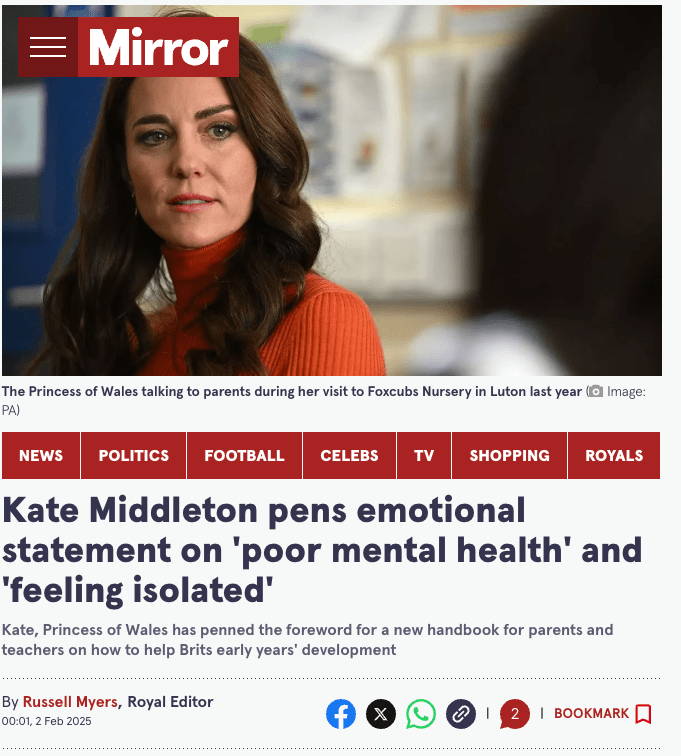
The backlash surrounding Kate Middleton’s Shaping Us Framework and her advocacy for early childhood development is a mix of skepticism, criticism, and outright hostility from anti-monarchy voices. The trending hashtags like #NotMyKing and #KateMiddletonCrusade suggest that many people view her initiative as either performative or lacking real impact. She seems to struggle with rebranding. Recently, she visited a knitwear factory to appear fashion forward now after her major fashion faux pas, she will not longer release her outfit details. Critics argue she has nothing else but her outfits.
Key Themes in the Criticism:
- Questioning Her Accomplishments
- Many users, such as MomC and Alex, ask what Kate has tangibly achieved in this space, arguing that her work is largely PR-driven without substantive results.
- Others believe that her initiatives mirror existing approaches, like the Solihull Approach, suggesting she isn’t introducing anything new.
- Accusations of Hypocrisy
- Some critics point to the broader issue of royals advocating for social causes while living in extreme privilege.
- Comparisons were drawn to Prince William’s homelessness initiative and King Charles’ environmental activism, with users highlighting contradictions in their actions versus their lifestyles.
- Skepticism About Her Personal Involvement
- Some, like Elizabeth A., argue that Kate likely did not write the foreword herself and that her role in shaping these policies is minimal.
- The suggestion that she should “get a degree in early years childcare” before advocating for childhood development reflects broader doubts about her expertise.
- Criticism of the Monarchy’s Role in Society
- Her Royal Heinous and others highlight government cuts to social services, implying that royal initiatives do little to address systemic issues.
- Others view the monarchy as out of touch, questioning why royals “tell the public how to be better people” while benefiting from wealth and privilege.
- Personal Attacks and Meghan Markle Comparisons
- Several users bring up Kate’s alleged role in Meghan Markle’s negative experiences within the royal family, calling her a “mean girl” and questioning her sincerity regarding mental health.
The Broader Context
This reaction highlights the deep division in public perception of the royal family. While some see Kate’s work as genuine and impactful, others view it as performative and self-serving. The backlash also reflects a larger anti-monarchist sentiment, where any royal-led initiative is met with resistance due to their privileged status and perceived detachment from real-world struggles.
Final Thoughts
Kate Middleton’s early childhood initiative may be well-intentioned, but without concrete policy changes, increased funding for services, or more transparent reporting on its impact, skepticism will persist. The criticism from anti-monarchy voices suggests that the royal family faces an ongoing PR battle in proving their relevance to modern society.
This also reinforces a broader challenge for the monarchy: in an era of increasing scrutiny, goodwill alone is not enough. Tangible, measurable impact is what will ultimately define whether initiatives like Shaping Us are seen as meaningful contributions or just another royal vanity project.
 celebchai.com
test
LikeLike