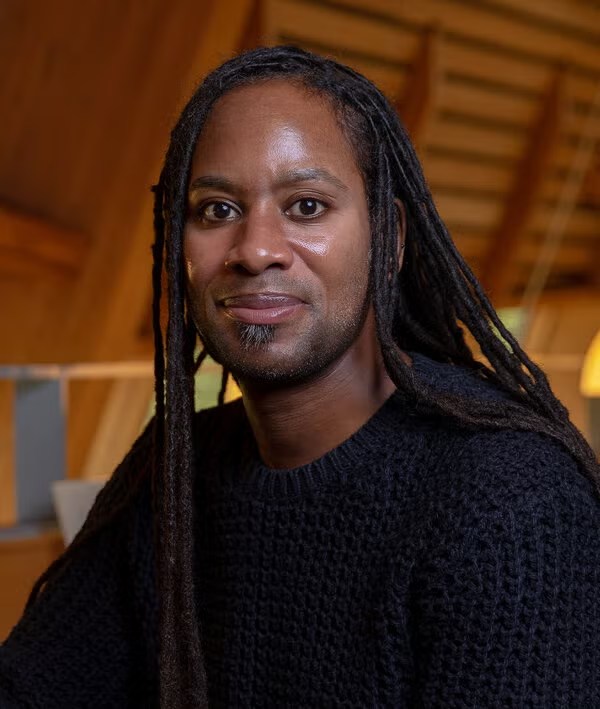
Jason Arday spent his life proving people wrong. He did not speak until he was 11 and could not read or write until he was 18. A careers adviser once told his mother that unpaid volunteer work was the best he could hope for.
He became the youngest Black professor in the University of Cambridge’s history. On 5 August 2026 he resigned that post, saying he had “reached the limits of what any person should reasonably be expected to endure.”
Nine days later, on 14 August, he was found unresponsive at an address in Battersea, south London. He was 41. More than two months on, the questions raised by his death remain unanswered, and the scrutiny that surrounded him has outlived him.
From Clapham to Cambridge
Arday was born on 9 May 1985 to Ghanaian parents and grew up on a council estate in Clapham, south London. He was autistic, and spoke openly about it. He carried the Olympic flame through south London in 2012.
He trained as a PE teacher, then earned a PhD from Liverpool John Moores University in 2015. He went on to Durham University as an associate professor, then to the University of Glasgow as professor of sociology of education. His research covered race in higher education, mental health and neurodiversity.
In 2023, at 37, Cambridge appointed him professor of sociology of education. The university promoted him as its youngest-ever Black professor, and the news travelled worldwide. Only around 1% of professors in UK universities are Black.
He was a trustee of the Runnymede Trust and the British Sociological Association. In 2024 he gave the Cambridge Autism Research Annual Lecture. Colleagues at Cambridge’s Autism Research Centre say they supported him closely throughout his three and a half years there because of the racism he faced.
The allegations, and what the investigations found
Claims that Arday’s 2015 thesis and some later papers contained plagiarism began circulating in 2025. Byline Times reports they were first raised by academics Dave Harris and Martyn Hammersley. A dossier flagged around 188 sentences matching a 2009 thesis by another researcher.
Liverpool John Moores University investigated and, in March 2026, concluded that his PhD stands. According to Emerald Book, the panel judged the overlaps “honest and reasonable error,” confined to introductions, policy descriptions and literature reviews rather than his own data or analysis. It also found his supervision so depleted that he reportedly had only one formal supervision session.
The story exploded in July 2026. On 21 July, Nathan Cofnas posted on Substack that he had run the thesis through plagiarism-detection software. Cofnas is a self-described “race realist” who has argued for genetic racial differences in intelligence; Cambridge ended his role in 2024. On 5 August, The Times published its own analysis alleging plagiarism and “impossible data.”
Arday denied plagiarising but admitted errors. He said some mistakes in his early work stemmed from his autism, which led him to rely on mimicry to process information. He argued that similar scrutiny would turn up similar errors in other academics’ work.
The formal record has since backed him. According to Byline Times, a 2018 paper on the mental health of Black and minority ethnic students, which The Times described as “retracted,” had only been corrected, with no finding of plagiarism or fabrication. A 2020 paper had already been cleared by its publisher, Taylor & Francis, which then reinvestigated and again did not substantiate the claims.
Byline Times counts four formal investigations into Arday’s work. None substantiated plagiarism. As of 21 October, it reported, The Times and the outlets that amplified its story had not corrected their claims.
Where publishers acted, they issued corrections adding missing citations and quotation marks, and left the research in place. Some critics, including The Times, still argue that extensive word-for-word overlap breaches academic standards whatever the intent. So far, every formal body that examined the evidence has stopped short of a misconduct finding.
A story that became a spectacle
The volume of coverage had no obvious precedent. Matt Walsh, head of journalism at Cardiff University, counted 242 substantive articles in UK national print newspapers between 25 July and 20 August. He concluded there was strong evidence of racism, noting that some pieces openly claimed Cambridge hired Arday because of his skin colour.
The Times went further than publishing. According to Feminegra, users documented The Times and Sunday Times running paid promotions on X and Facebook for several critical Arday stories, some still appearing after his death. The paper has released no figures on what it spent. By NewsCord’s count, it was also the biggest single source of coverage, with 44 of the 249 national articles in the 22 days before he died.
The scrutiny soon moved past his scholarship to his running feats, his fundraising and his private life. Daily Mail columnist Amanda Platell wrote that in a “normal world” he would have stayed a PE teacher. Sociologists who spoke to Nature said they knew of no other plagiarism case that drew anything like this attention.
Online, it was worse. One study of 27,179 posts on X mentioning Arday between 5 and 9 August found 751 hateful or abusive posts. They included racist, ableist and anti-LGBTQ+ slurs and wishes of harm, and together drew more than 875,000 views.
The warnings came early. On 31 July, Cambridge autism researcher Simon Baron-Cohen urged media organisations to stop their “relentless bullying of a vulnerable autistic man.” The coverage continued. Labour MP Bell Ribeiro-Addy later said the level of media scrutiny an academic faced was “unheard of.”
Friends saw the danger too. On 3 August, writer Nels Abbey turned down a TV request to discuss the allegations, saying he was “extremely concerned for Jason’s wellbeing.” Immigration lawyer Jacqueline McKenzie raised similar alarms as the coverage escalated.
The press regulator IPSO says it is reviewing a high volume of complaints. Its Editors’ Code bars journalists from harassment and persistent pursuit.
Cambridge’s choices
Cambridge had once called the attacks on Arday a “vile campaign to undermine his credibility.” Then, on 5 August, in the middle of the media storm, it publicly announced an investigation into his appointment. Arday resigned the same day.
As Nature has pointed out, UK workplace guidance from Acas entitles an employee under investigation to confidentiality. An investigation is meant to establish facts, not assign blame. Announcing one during a press frenzy removed any chance of confidentiality and suggested wrongdoing before any process had run.
The university cited new information but has not said whether it was put to Arday, or whether he had a chance to respond. People under investigation are entitled to see the evidence and to be accompanied at formal meetings. Any registered disability must also be taken into account, and Arday was openly autistic.
In September, Cambridge commissioned an independent review in two parts. The first, led by former Chief Crown Prosecutor Nazir Afzal, examines the support Arday had before his death. The second will look at wider university processes. Many are calling for a full public inquiry.
The scrutiny that outlived him
A coroner has opened an inquest. Police said the death was unexpected but not suspicious. Senior coroner Dr Julian Morris said the circumstances warranted investigation, and asked the press to be mindful of how it reports the case and of Arday’s family.
On 17 August, mourners filled Trafalgar Square for a vigil. Ghent University, where Cofnas now works, has since barred him from teaching on campus and restricted his research while it investigates, according to reports.
Then, on 19 October, the Committee for Academic Freedom (CAF) announced its own review of Arday’s appointment, his credentials and the role of diversity policies in hiring. It is chaired by Lord Singh of Solihull, with Steven Pinker, Robert Tombs, Alice Sullivan and Lord Glasman on the panel and journalist Nick Wallis leading the investigation. It cannot compel evidence and expects to report in four to six months.
CAF argues that Cambridge’s own review has shifted toward welfare and risks prejudging whether the scrutiny Arday faced was legitimate. Its director, Edward Skidelsky, told Times Higher Education the review has no predetermined conclusion.
Critics question its independence. Byline Times reports that CAF has acknowledged support from Ben Delo, a major Reform UK donor, and did not answer questions about who is funding the inquiry. CAF had also criticised Arday’s police complaint against one of his accusers, and previously defended Cofnas.
Cofnas, meanwhile, is due to speak at Oriel College, Oxford, on 17 November, at a student Reform society event titled “Is DEI Undermining Higher Education?” Oriel says it is a student society booking, not a college event. The decision has drawn protests.
What his death demands
Scrutiny of academic work is legitimate, whoever wrote it. But examining allegations is different from turning one man into a national spectacle. That line was crossed long before 14 August.
What should follow is not complicated. Newspapers that called his work plagiarised or retracted should correct the record, now that four investigations have not backed them. Universities need investigation processes that protect confidentiality and account for disability, especially when the press is circling.
The sector also needs independent bodies that can hold institutions to account, as Nature has argued. Until then, a public inquiry is the clearest route to answers.
Race cannot be edited out of this story. A Black, autistic scholar from a council estate rose further than almost anyone expected, and much of the coverage treated that rise as proof of fraud. Black academics are now asking, as Nature put it, “Could I be next?”
In his resignation letter, Arday promised to return “stronger, wiser and with the same determination that has always defined my journey.” He never got the chance. His memoir, Great and Unfortunate Things, was published in the UK on 27 August.
His family remembered a gentle man who always wanted to see the best in everyone. The least the rest of us can do is see him clearly now.
If you have been affected by this story, Samaritans are available day or night on 116 123 (UK and Ireland). In the US, call or text 988.
Sources
- BBC News, “Jason Arday, ex-Cambridge professor at centre of plagiarism row, found dead,” 15 August 2026
- Nature, “The death of Jason Arday must prompt deep reflection”, 2 September 2026
- Byline Times, “Jason Arday Again Cleared of Plagiarism as His Attackers Launch an ‘Independent Inquiry'”, 21 October 2026
- Times Higher Education via Inside Higher Ed, “Scholars Launch Their Own Review Into Jason Arday Appointment,” 23 October 2026
- The Conversation, “Jason Arday and the new politics of plagiarism”
- Euronews, “The Jason Arday controversy”, 10 August 2026
- Autism Research Centre, “Professor Jason Arday, In Memoriam”
- Anglia Ruskin University, honorary award citation
- Royal Society, “Professor Jason Arday”
- Feminegra, “Media Treatment of Jason Arday Under Fresh Scrutiny After Cofnas Sanctions”, 31 August 2026
- Feminegra, “Ghent University Suspends Nathan Cofnas After His Campaign Against Jason Arday”, 20 August 2026
- Feminegra, “Jason Arday Cleared Again as Another Inquiry Targets His Cambridge Appointment”, 24 October 2026
- Emerald Book, “How Jason Arday Was Repeatedly Cleared of Plagiarism,” 23 October 2026
- Feminegra, “Why Was The Times Paying to Amplify Jason Arday Coverage as Concerns Grew About His Mental Wellbeing?”, 15 August 2026

