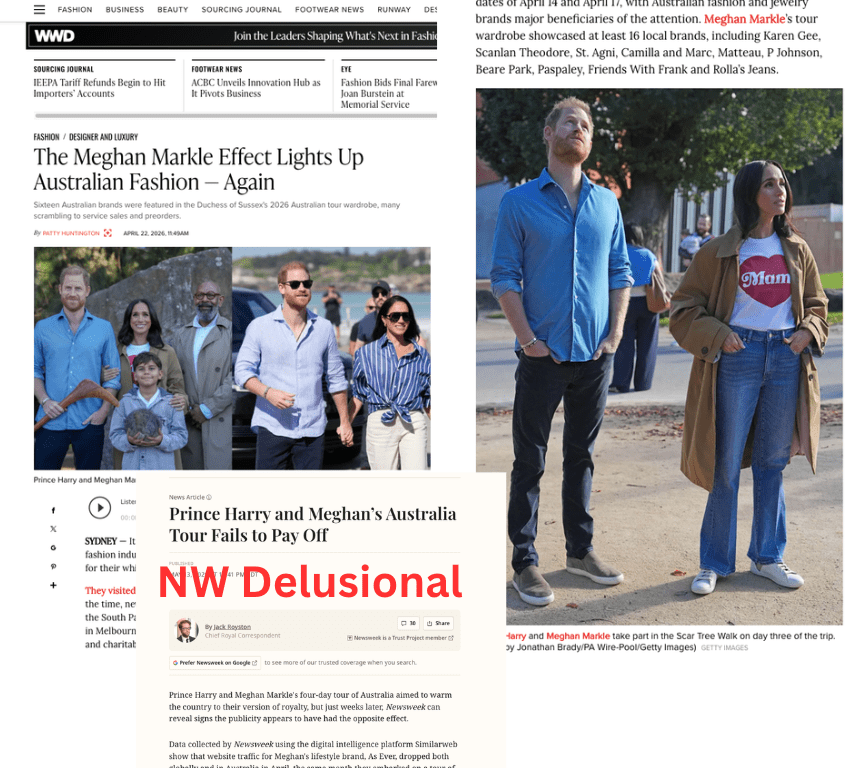
When Newsweek set out to prove Meghan Sussex’s lifestyle brand was failing, they reached for what they assumed was a damning statistic: As Ever was averaging just over 220,000 monthly visits to asever.com. The framing was clear. Look how few people are bothering with her store. Look how the hype has faded.
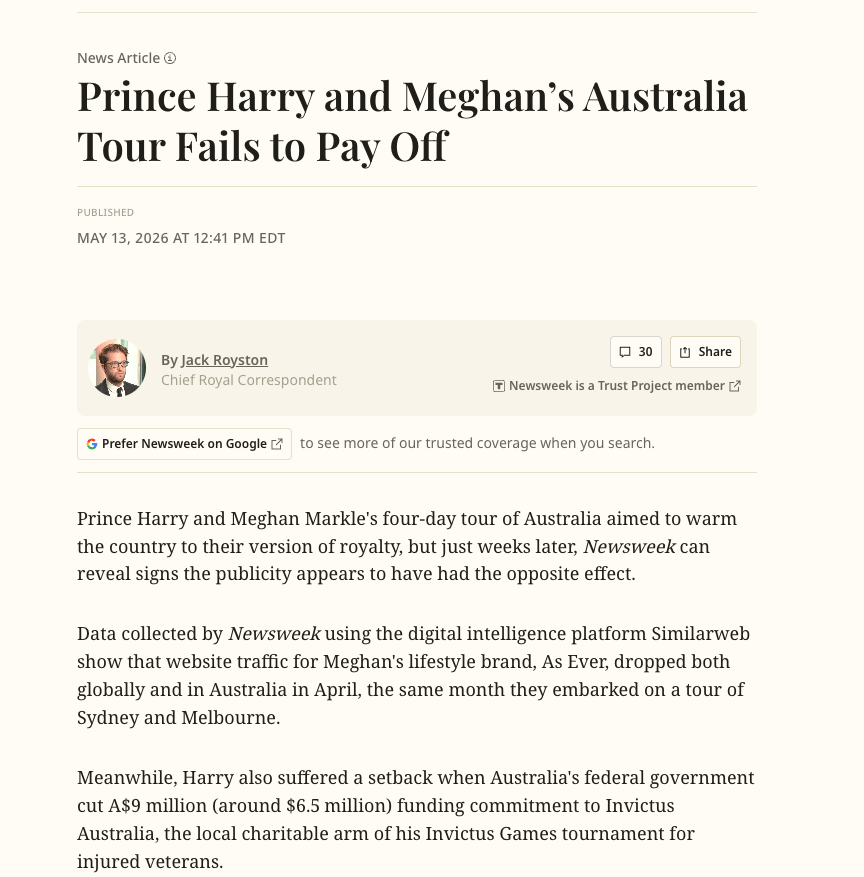
Anyone who has ever run an e-commerce business or read a Series A pitch deck immediately recognized the problem with this framing. 220,000 monthly organic visits to a curated DTC site, sustained months past launch, with zero paid acquisition spend, is not a failure metric. It is the metric venture capitalists pay millions to reverse-engineer. Newsweek published it as a tombstone. It reads as a flex.
What follows is what the math actually says, and why this episode fits a pattern Celeb Chai has documented for over a year: the same outlets that pathologize her success keep publishing the data that disproves their own headlines.
What 220,000 Monthly Visits Actually Means
In DTC food and beverage, a Series A round typically requires 50,000 to 100,000 monthly visits combined with paid acquisition burning $40 to $80 per customer. Brands at that scale routinely raise at $30 to $80 million valuations. As Ever is doing more than double the traffic with no paid spend, which means the customer acquisition cost is effectively zero. Replacement value of that organic funnel alone, if a competitor tried to buy it through Meta and Google, would run $8 to $15 million annually before a single jar of spread shipped.
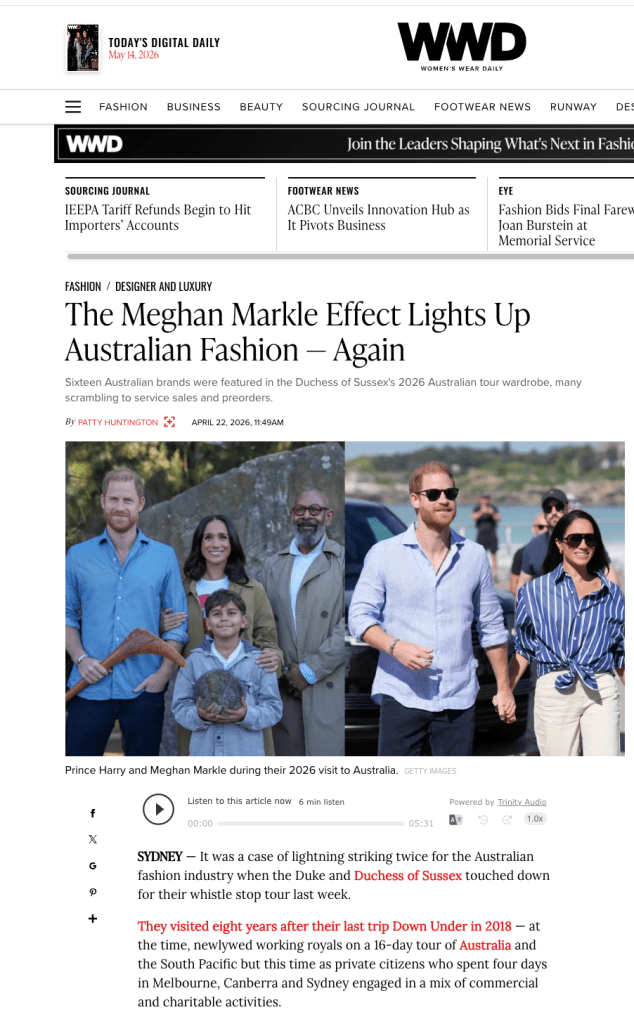
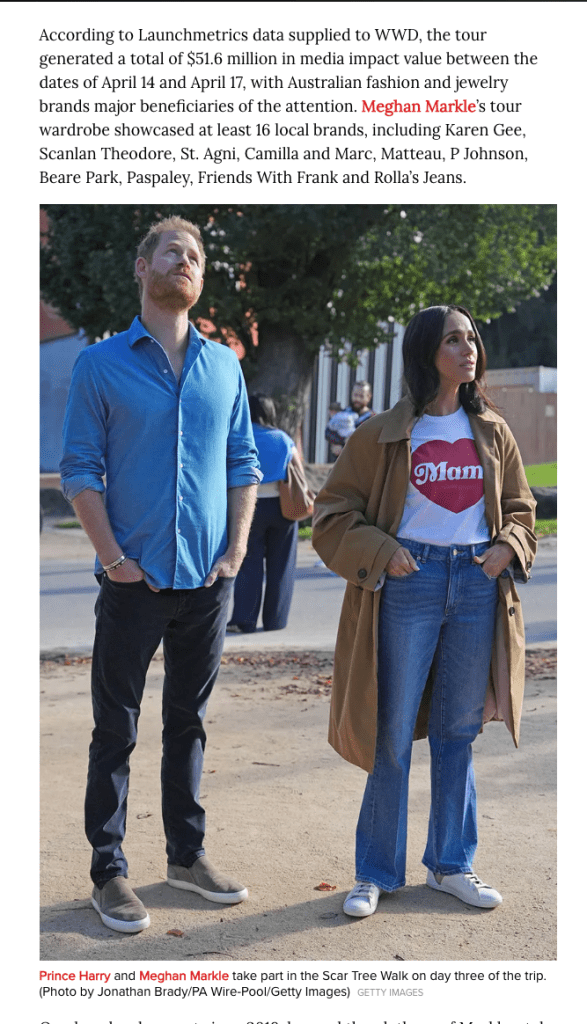
Royston’s May 13 piece for Newsweek extended the data across three months: 213,030 visits in February, 226,330 in March, 178,143 in April, with Australian share dropping from 9.04 percent to 6.28 percent across the same window. He framed the April dip as proof the Australia tour failed to move the needle for global expansion. The framing measures the wrong funnel. April’s 178,143 visits remain well above the Series A benchmark, and the Australia tour was not a customer acquisition campaign for asever.com because asever.com does not ship to Australia. The tour’s commercial activation ran through partner brands and the OneOff platform she invested in, and on that metric it cleared inventory across sixteen Australian fashion brands inside 48 hours, generated $51.6 million in Launchmetrics MIV, drove Rolla’s Jeans to an 800 percent week-on-week sales spike, and surpassed one million outfit views on OneOff in three days. Royston measured a domestic spreads-and-wine storefront and concluded a multi-stream lifestyle business was failing. That is not analysis. That is picking the one chart that supports the headline and ignoring the four that do not.
Conversion Math, Calibrated to Real Data
The blanket two to three percent industry-average conversion rate does not apply here, and the August 2025 rosé drop proved it. In the first 10 minutes of the August release, As Ever moved 10,000 bottles at roughly thirty dollars each. That is approximately $400,000 to $500,000 in revenue inside a 600-second window, before the rest of day one. Twenty percent of those buyers came back for six-packs and twelve-packs. The July 2025 drop sold out completely in 45 minutes at a sustained 148 to 178 bottles per minute.
These are not the numbers of a struggling brand. They are the numbers of a supply-constrained one.
Splitting the 220,000 monthly visits into the three behavioral buckets that actually exist on a drop-based DTC site:
Drop-day visitors, who time the launch and arrive ready to transact, convert in the 30 to 50 percent range with average order values between $90 and $180 because they buy multi-packs and bundle wines with spreads. Roughly 30,000 to 40,000 of the monthly traffic falls into this bucket on a launch month.
Returning visitors checking for restocks, who already know the brand and the price points, convert at 10 to 15 percent with AOVs between $100 and $150. Roughly 40,000 to 60,000 monthly.
Curiosity traffic driven by earned media, including hostile coverage, converts at one to three percent with AOVs in the $60 to $90 range. This is the largest bucket at 120,000 to 150,000 monthly, and the one Newsweek’s framing assumes represents the entire audience.
Stack those buckets and the As Ever direct-to-consumer line lands between $1.2 and $4 million per month depending on whether there is an active drop, an active restock, or a quiet inventory-build month. Annualized, that is conservatively $18 to $28 million on DTC alone.
That is one revenue line. There are at least four others.
The Full Revenue Stack
Affiliate commissions through the ShopMyShelf storefront are documented and quantifiable. One snapshot of store sales totaled $1,115,695 across five items, with the Ulla Johnson blue dress alone moving 1,000 units at $950 a piece. At standard affiliate rates of 20 to 30 percent, that single snapshot generated $223,000 to $334,000 in commission. Annualized across the With Love, Meghan halo effect amplifying everything she wears, the affiliate line runs $2.5 to $4 million.
Brand partnership and licensing leverage is harder to quantify directly but the Media Impact Value figures make the floor visible. The original With Love, Meghan launch generated $10 million in MIV, with Loro Piana earning $1 million from a single sweater appearance, Zara $973,000, Jenni Kayne $497,000, and Emilia Wickstead $362,000. Brands at that MIV multiplier are now paying for placement and partnership access. Conservatively $3 to $5 million annually.
The Netflix deal, reported in the $80 to $100 million range over five years, amortizes to roughly $16 to $20 million annually. With Love, Meghan debuted in the global top ten and triggered downstream commercial spikes that became their own news cycles: Waitrose’s 3,200 percent truffle salt jump, Valencia Key’s 11,000 percent surge, Club Chainstitch shutting down its waitlist, Le Creuset moving inventory in Meghan-coded shades. Season two and the Confessions of a Female Founder podcast keep the deal active.
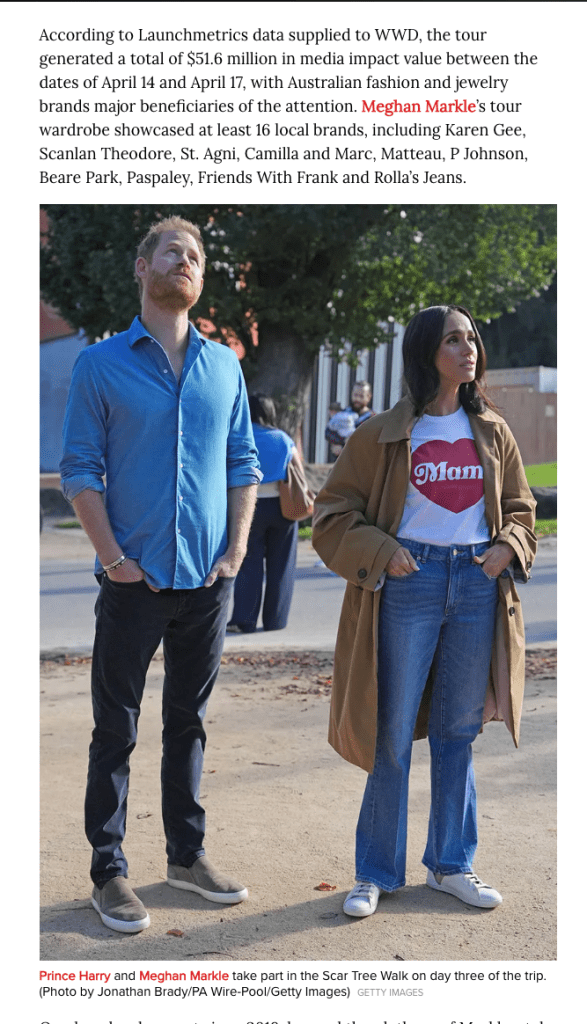
The April 2026 Australia tour added a fresh data point so large it deserves its own paragraph. Launchmetrics calculated $51.6 million in Media Impact Value across four days, with sixteen Australian brands featured in the tour wardrobe. Karen Gee’s Priscilla dress generated $1.6 million in MIV in 48 hours and sold out the ready-to-wear version within two hours. St. Agni’s suede Utility Cocoon set earned $998,000 in 48 hours. Friends With Frank pulled in $575,000, with both featured styles selling out inside two days. Scanlan Theodore reported a 250 percent week-on-week sales increase across three featured pieces. Rolla’s Jeans saw the Midtown Bootcut in Iris Wash spike 800 percent week-on-week, with the cofounder describing the lift as “a hurricane.” OneOff, the AI-powered fashion discovery platform Meghan partnered with as both participant and investor, surpassed one million outfit views in the first three days of her page going live. More than two dozen Australian products sold out.
This is not a private citizen who happened to visit Australia. This is a distribution channel.
Add Archewell operations, residual Spotify and audio rights, and speaking engagements at a conservative $2 to $5 million annually.
The Total
Stacking the lines: $18 to $28 million on As Ever DTC, $2.5 to $4 million on affiliate, $3 to $5 million on brand partnerships and licensing, $16 to $20 million amortized Netflix, and $2 to $5 million across foundation and ancillary streams. The annual envelope lands between $41 and $62 million, with As Ever DTC and Netflix as the anchor pillars and brand partnerships as the high-growth middle line.
This is the businesswoman that legacy media outlets describe as struggling.
The Pattern, Named
The Celeb Chai analytical framework has been tracking this pattern across a year of coverage. The BBC ran “Meghan’s divisiveness may well work to her advantage” days before the Confessions of a Female Founder podcast launch, framing as thoughtful inquiry what was structurally a pre-emptive undermining. The piece quoted Tina Brown’s 1990s-vintage cultural takes while ignoring the hard MIV numbers in front of it. It reported a 19 percent UK approval rating without acknowledging the BBC’s own role in shaping that rating through years of platforming anti-Meghan commentary as expertise.
A self-described royal commentator screenshotted six items of each As Ever product loaded into a shopping cart she announced she would never pay for, believing this would somehow sabotage the brand. The basic e-commerce error, that carts do not reserve inventory, became its own viral moment, and the screenshot ended up functioning as unpaid advertising for a brand that was selling out in minutes regardless.
The March 2025 troll cycle treated Meghan’s store sales of $1.1 million on five products as evidence of desperation. Critics labeled affiliate marketing, a standard digital commerce practice used by every major influencer and lifestyle brand on the planet, as somehow beneath her. The implicit standard was that there exists some other path to revenue that would be acceptable, but the critics never specified what it was, because the framing was never about the business model. It was about whether she should be permitted to monetize at all.
Newsweek’s 220,000 disclosure is the latest installment in this pattern. The framing assumes a reader with no e-commerce literacy who will see a six-figure number divorced from context and read it as small. The numbers leak through anyway because they are verifiable, and the audience does the math.
The Structural Irony
Here is the part that makes the pattern self-defeating. As Ever does not appear to spend on paid customer acquisition. It does not need to. Newsweek, the BBC, the Daily Mail, and the rotating cast of royal commentators run the campaign for free. Every “struggling” headline is a top-of-funnel ad. Every “divisiveness” think-piece is a brand recall exercise. Every screenshotted shopping cart is a product discovery moment for thousands of viewers who did not previously know what the brand sold.
The 220,000 monthly visits to asever.com are not despite the hostile coverage. They are partly because of it. The same outlets generating the failure narrative are simultaneously driving the traffic that disproves the narrative. This is the structural irony at the center of every Meghan business cycle and it explains why the coverage will not stop. Outlets need her for traffic and engagement more than she needs them for distribution. The relationship is parasitic in exactly the opposite direction from how it is framed.
The Australia tour numbers make this almost embarrassingly explicit. A four-day visit generated $51.6 million in MIV and sold out the inventory of more than two dozen brands. The press coverage was, again, framed around her as a private citizen no longer entitled to attention. The press coverage simultaneously generated the attention it claimed she no longer commanded.
What Newsweek Actually Proved
A 220,000 monthly visit organic funnel, sustained months past launch, with sellouts that frustrate buyers and generate fresh news cycles, attached to a Netflix deal, a thriving affiliate operation, brand partnership leverage measured in eight-figure MIV, and a documented ability to liquidate inventory across sixteen Australian fashion brands in 48 hours.
This is what Newsweek published as evidence of failure. The cycle continues because the framing has nothing to do with the data. The framing exists to perform a specific narrative function, and the data is included only as a prop the writer assumes the reader will not actually evaluate.
The reader, as it turns out, can evaluate it just fine.
 celebchai.com
Your article is exceptionally informative and well-researched. It’s very satisfying to see Royston’s framing so effectively destroyed.
LikeLiked by 1 person